
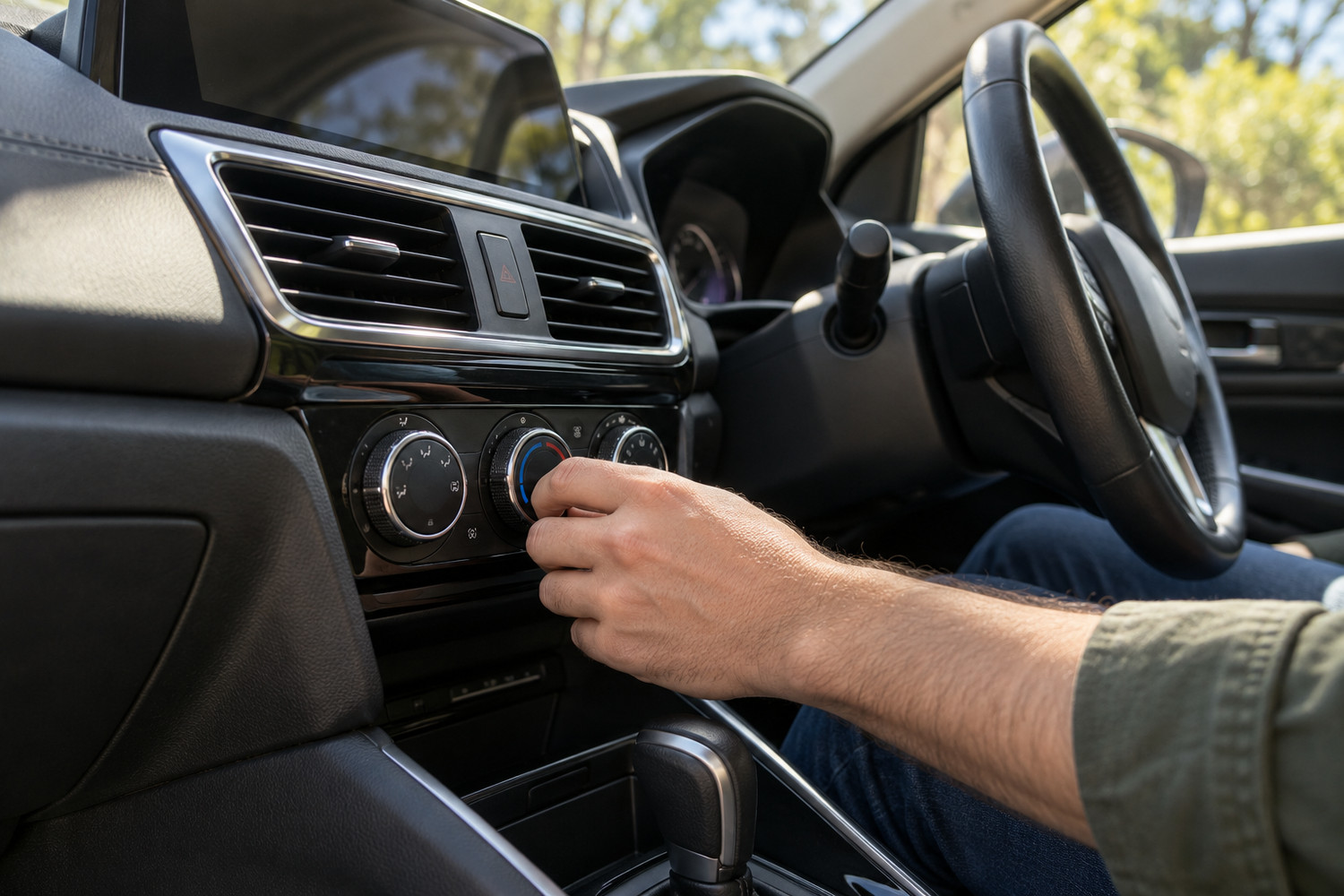
Warm air from the vents usually means the system has leaked. But a failing compressor, a blocked condenser, a stopped cooling fan or an electrical fault all feel the same from the driver’s seat. That is why car air conditioning in Colac starts with finding the cause, not with topping up the gas. Refrigerant put into a leaking system leaves again.

An aircon system is sealed. The refrigerant inside carries heat out of the cabin and dumps it at the front of the car. It is not used up. So if there is not enough left to cool with, it escaped.
That leaves two stories, and only two.
The first is a slow leak. Seals and hose joints dry out and pass a little gas at a time. Cooling gets weaker across a summer, then weaker the next one.
The second is that something stopped working. A part failed, or the electrics that switch it on failed. It was cold on Friday and warm on Monday.
The second story is not always a refrigerant problem. A blown fuse, a failed pressure switch or a broken wire will stop the compressor switching on while the gas side sits there perfectly healthy. That is auto electrical and diagnostics work.
The pattern matters more than the temperature. Five patterns cover most cars, and each one points somewhere different.
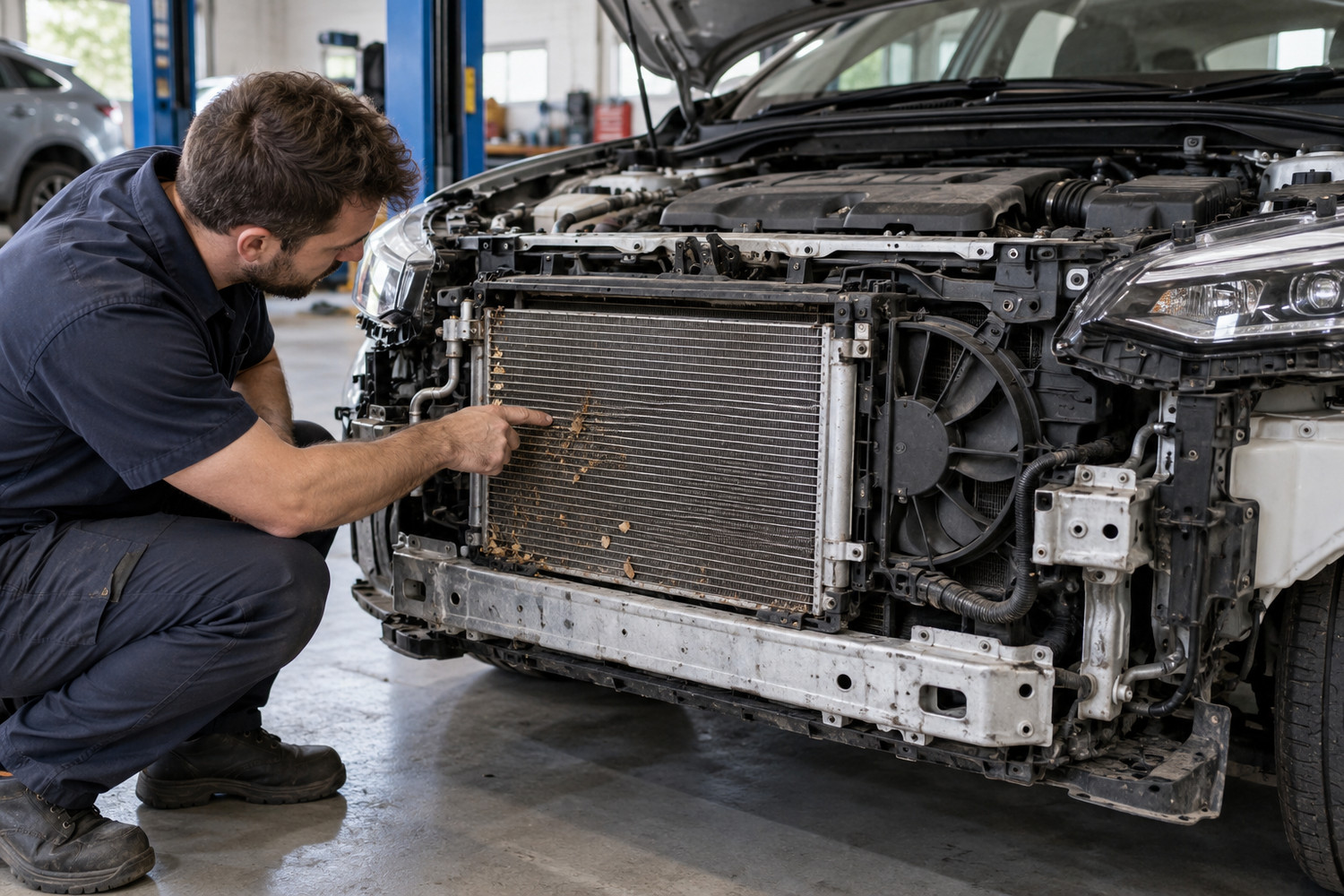
Two words first. The compressor is the belt-driven pump that pushes refrigerant around. The condenser is the small radiator at the very front of the car, ahead of the engine radiator.
| What you notice | What it usually points to | How urgent it is |
|---|---|---|
| Cooling has faded a little each summer | A slow leak at a seal, hose or joint | Not urgent. Book it before summer |
| Never cold on the first hot day | A bigger leak, or a system emptied over winter | Not urgent, but the leak only grows |
| Cold on the move, warm at idle | Airflow at the front: a blocked condenser, or a stopped cooling fan | Soon. That fan matters to the engine too |
| Grinding or a squeal when the aircon engages | The compressor, or the clutch that engages it | Quickly. Leave the aircon off until it is checked |
| Cold one side of the dash, warm the other | A flap inside the dash, not the refrigerant side | Not urgent, and no gas needed |
The last row saves people money. If one side still blows cold, the system has gas and the compressor is running. Adding refrigerant would change nothing.

Mostly, yes. Warm vents are uncomfortable rather than unsafe. Two exceptions matter.
The first is noise. The compressor runs off the same belt as the alternator, and on many cars the water pump. A seizing compressor can shred that belt or lock it, and you lose whatever else was sharing it. Switch the aircon off and get the car looked at.
The second is the windscreen. Air conditioning dries the air as well as cooling it, so a fogged screen clears faster with the button pressed. Many cars switch the compressor on themselves when you select demist. If it is dead, the demister still works off the heater and blower, just more slowly. On a wet morning out towards Apollo Bay, that is a visibility problem.
On a Victorian roadworthy, the aircon itself is not on the list. The Vehicle Standards Information sheet that Licensed Vehicle Testers work to treats air conditioning and rear window demisters as optional equipment that need not work, provided its condition does not make the car unsafe. The windscreen demister is different. It has to be present and working on passenger vehicles built from 1971 onwards.
The aircon and the engine cooling system sit side by side at the front and share the airflow, but they are separate systems with separate faults. A gauge that climbs is a different question, and the cooling system page covers it.

Aircon on a car out here works harder than aircon on a car that lives in the suburbs. Five things do most of the damage.
That last one has a free fix. Run the aircon now and then over winter, even for a few minutes. It moves oil around with the refrigerant and keeps the seals wet.
A regas empties the system and weighs the right amount of refrigerant back in. On a system that leaks, that buys you one summer at best. You have paid for the gas twice and the fault is still there.
This is not just workshop preference. The Australian code of practice for automotive air conditioning says refrigerant must not be added to top up an existing charge. A system known to be leaking must not be topped up until the leaks have been repaired.
Handling the gas at all needs a licence. Under the Commonwealth ozone regulations, it is an offence to handle fluorocarbon refrigerant without a licence from the Australian Refrigeration Council. Every licensed business carries an ARCtick number, and it is a fair thing to ask for when you ring around. The number here is AU48457.
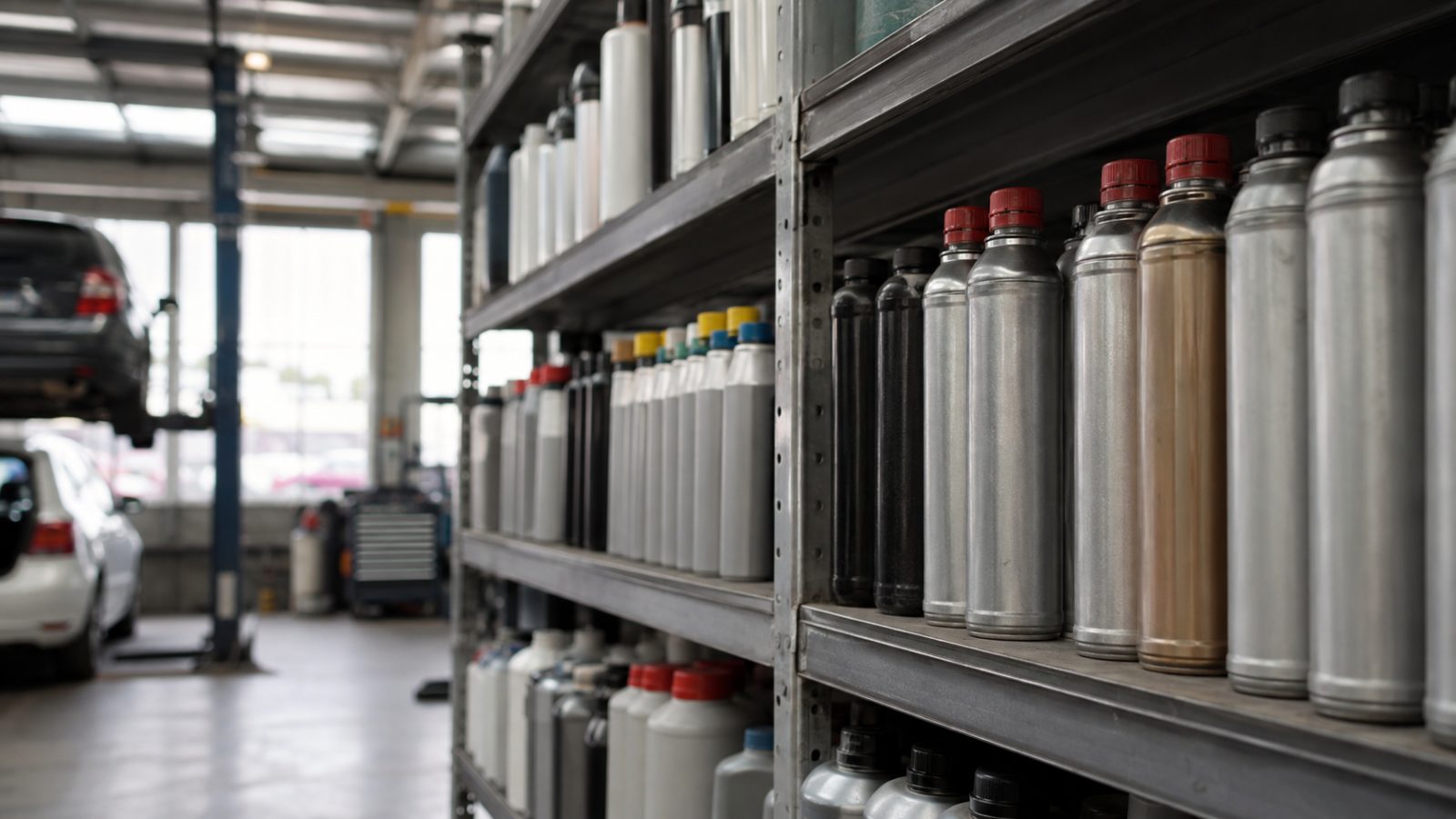
Worth knowing. The top-up cans on the auto shop shelf are a poor bet. Most carry a sealant, and sealant contaminates the recovery equipment a workshop has to connect to your car, so the next place you take it may decline the job. A can cannot draw a vacuum either, so any moisture stays in the system. And a car built from around 2017 onwards may not take the same refrigerant as an older one. Getting the fill weight right needs scales, not a gauge on a can.
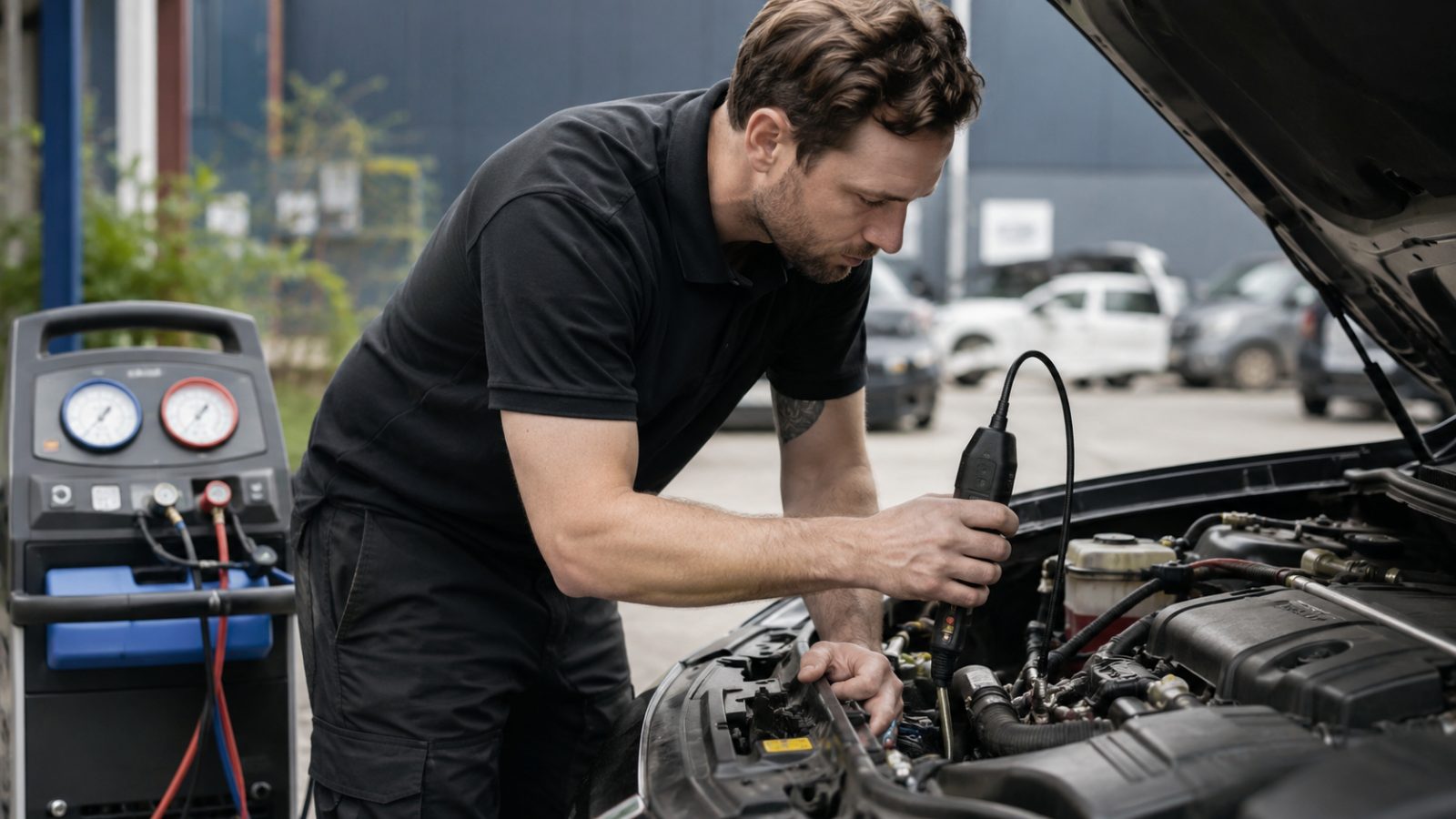
The gas already in the car comes out first and gets weighed. That number tells you a great deal. Nearly empty means a leak worth hunting for. Close to full means the fault sits somewhere else. Then the system goes under pressure so the escape point can be found, with an electronic detector or a dye that glows at the leak under ultraviolet light. The clutch and the cooling fan are checked for whether they work when they should. What can be repaired or replaced once the fault has a name is set out on the air conditioning page.
What separates a cheap job from a dear one is where the leak turns out to be. A seal or hose at the front of the engine bay is easy to reach. A condenser sits behind the bumper, so it is more work. An evaporator is the expensive one, because it lives inside the dash. None of that is known before the leak is found, which is why nobody honest quotes the repair over the phone.
The gas is the cheap part. The hole it went out of is the job.
Book online through the contact form and say what the car is doing. When the cooling started to fade. Whether it is worse at idle than on the move. Whether it makes a noise when the aircon comes on. Those three answers are the most useful thing you can bring to a booking for car air conditioning in Colac.
Moving air does the cooling work at the front of the car. Once you stop, the fan has to take that over, so a fan that has stopped turning shows up only in traffic. A condenser packed solid with dust or leaves behaves the same way, because too little air gets through it to carry the heat off.
It is a poor idea on a car that has lost its gas, because the gas leaving is the fault and a can does nothing about that. The sealant most cans carry creates a second problem, since it can leave a workshop unable to put its equipment on your car. Getting the fill weight right is not possible with a can in any case.
Yes, and it costs nothing to do. The seals stay soft while oil is moving around the system with the refrigerant, and that only happens while the compressor is turning. A system switched off all the way through the cold months is more likely to be flat by the time you want it again.


















Website By CJ Digital


