

Work utes and vans must be serviced according to each vehicle’s specific manufacturer schedule, which tracks elapsed calendar time and accumulated kilometres side by side. Routine maintenance falls due on whichever threshold is reached first, rather than on mileage alone. Towing, heavy loads, dust and prolonged idling may bring additional maintenance requirements into play. Check the conditions and instructions in that vehicle’s manual.

Every commercial vehicle carries its own scheduled service requirements set by the manufacturer. Even within a single trade business, a common company livery or shared yard does not mean a turbo-diesel dual-cab ute follows the same maintenance timetable as a petrol delivery van. Different makes, models, engine designs, and model years specify distinct service routines, fluid specifications, and inspection points.
Consider a trade contractor operating an active daily delivery van alongside a second utility used primarily as a spare runabout. Assuming both vehicles can share a single maintenance rule risks damaging components or missing scheduled fluid renewals. One vehicle might require logbook checks every 12 months or 15,000 kilometres, while another model requires attention every 6 months or 10,000 kilometres. The logbook in the glovebox is the definitive authority for each machine.
Modern instrument clusters often display an intelligent oil-life reminder or service warning prompt. What an electronic reminder monitors varies by model. An oil-life reminder does not necessarily cover every scheduled inspection or replacement. It does not inspect brake line condition, check driveline lubricants, examine steering joints, or verify cabin pollen filters. Use the full service schedule alongside any reminder so other required checks are not missed.
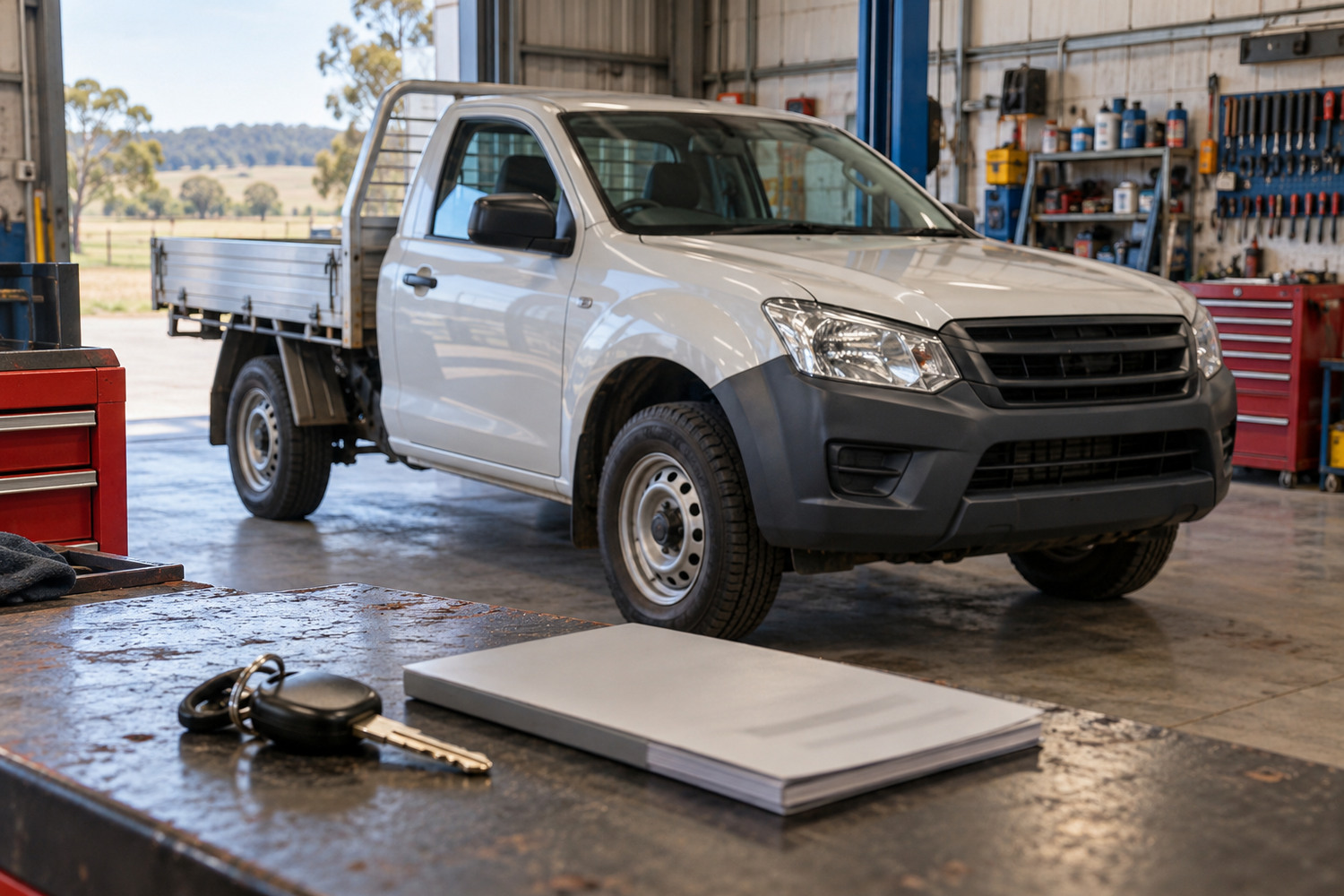
Logbook schedules are designed around two parallel triggers: distance travelled and calendar months elapsed. A lightly driven work vehicle that spends days parked behind the workshop or only makes short trips around town can easily reach its six-month or twelve-month service date with only a fraction of the distance allowance used. Low odometer readings never waive the calendar requirement.
Engine oil and hydraulic fluids degrade through oxidation and thermal cycling regardless of distance. Short, intermittent trips prevent engines from reaching stable operating temperatures, allowing unburnt fuel and condensation to accumulate inside the crankcase. Brake fluid continuously absorbs atmospheric moisture over time, lowering its boiling point and promoting corrosion inside callipers and lines. Rubber drive belts, coolant hoses, and suspension bushes also age and harden through atmospheric exposure and environmental changes.
Tracking your work vehicles requires recording two forward markers: the next due odometer reading and the next calendar due date. For example, if a spare ute has a twelve-month service limit and has covered only 3,000 kilometres, the service is still due when that time limit is reached. The manufacturer schedule accounts for stationary chemical aging just as strictly as highway wear.

Logbook manuals outline baseline intervals for standard driving, alongside explicit severe or harsh operating conditions. Trade utes and commercial vans routinely operate inside these harsher operational bands. Depending on the vehicle, demanding conditions may require extra inspections or earlier replacement of specified fluids and filters.
Operational patterns that trigger additional maintenance include:
Dust rapidly clogs engine air filters and cabin filters, reducing airflow and allowing abrasive particulates toward internal surfaces. Continuous heavy loads put elevated thermal stress on transmission fluid, differentials, and transfer cases. Prolonged idle time racks up engine operating hours that never register on the odometer, degrading engine oil while the vehicle stands still. Checking the additional maintenance section in the vehicle manual identifies which fluids, filters, and chassis grease points require inspection between standard intervals.

A scheduled service maintains known wear items according to predictable engineering limits. It does not replace immediate mechanical investigation when an unexpected symptom develops between service dates. Waiting for a scheduled service date while operating a vehicle with a developing mechanical fault risks safety and can cause compounded mechanical damage.
Fresh symptoms that require prompt assessment include:
If an issue compromises road safety, vehicle stability, or braking performance, the vehicle must be parked immediately. Arrange professional recovery or transport rather than attempting to nurse an unsafe vehicle along the road. Routine booking processes apply to roadworthy, functional vehicles needing scheduled maintenance, not machines experiencing urgent safety-critical defects.

Prioritising maintenance across several vehicles requires evaluating the immediate condition of each asset against its formal requirements. Use the following decision table to determine priority order:
| Situation | What to check | Next action |
|---|---|---|
| Time limit reached | Vehicle logbook due date against current date | Book the scheduled time-based service even if kilometres remain low. |
| Distance limit reached | Current odometer reading against service record sticker | Book the scheduled kilometre-based logbook service. |
| Work pattern changed | Daily towing demands, payload weights, and gravel exposure | Review manufacturer severe service schedule for early fluid and filter changes. |
| New fault observed | Warning lamps, fluid puddles, altered steering, or brake noise | Stop driving if safety is affected; arrange inspection before standard service. |
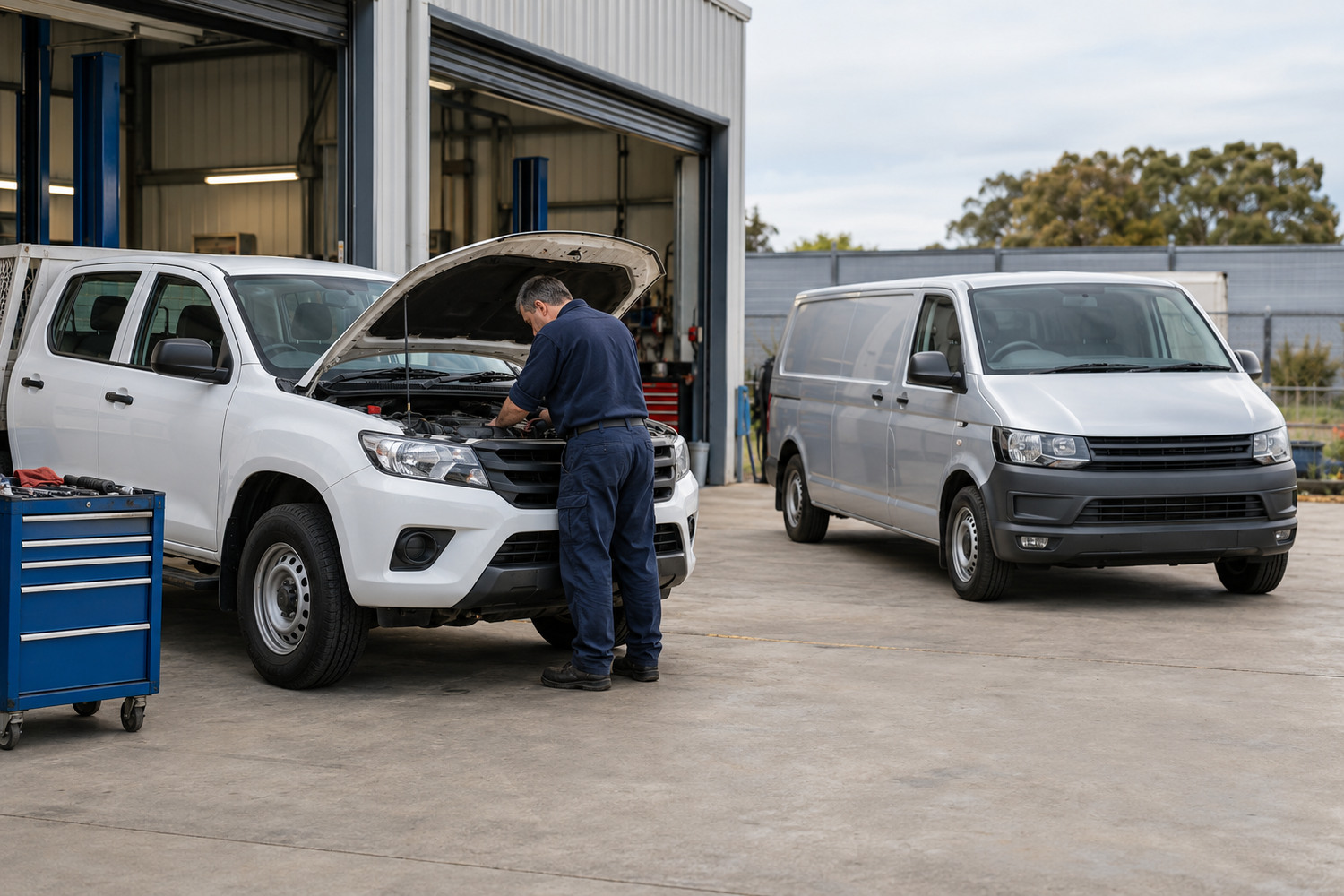
Applying the correct service requirements to each utility and van preserves operational reliability, maintains logbook compliance, and prevents unexpected downtime across regional roads. Ask the workshop to confirm the requirements for each vehicle, the specified fluids and the service records it will provide.
For regional businesses running trade utilities and light commercial vans, professional fleet servicing in Colac provides coordinated logbook management across mixed makes and models. Owners can arrange log book servicing suited to individual operating demands and business hours. For non-urgent maintenance, inspections, and schedule reviews, book online through our workshop enquiry form.


















Website By CJ Digital


