
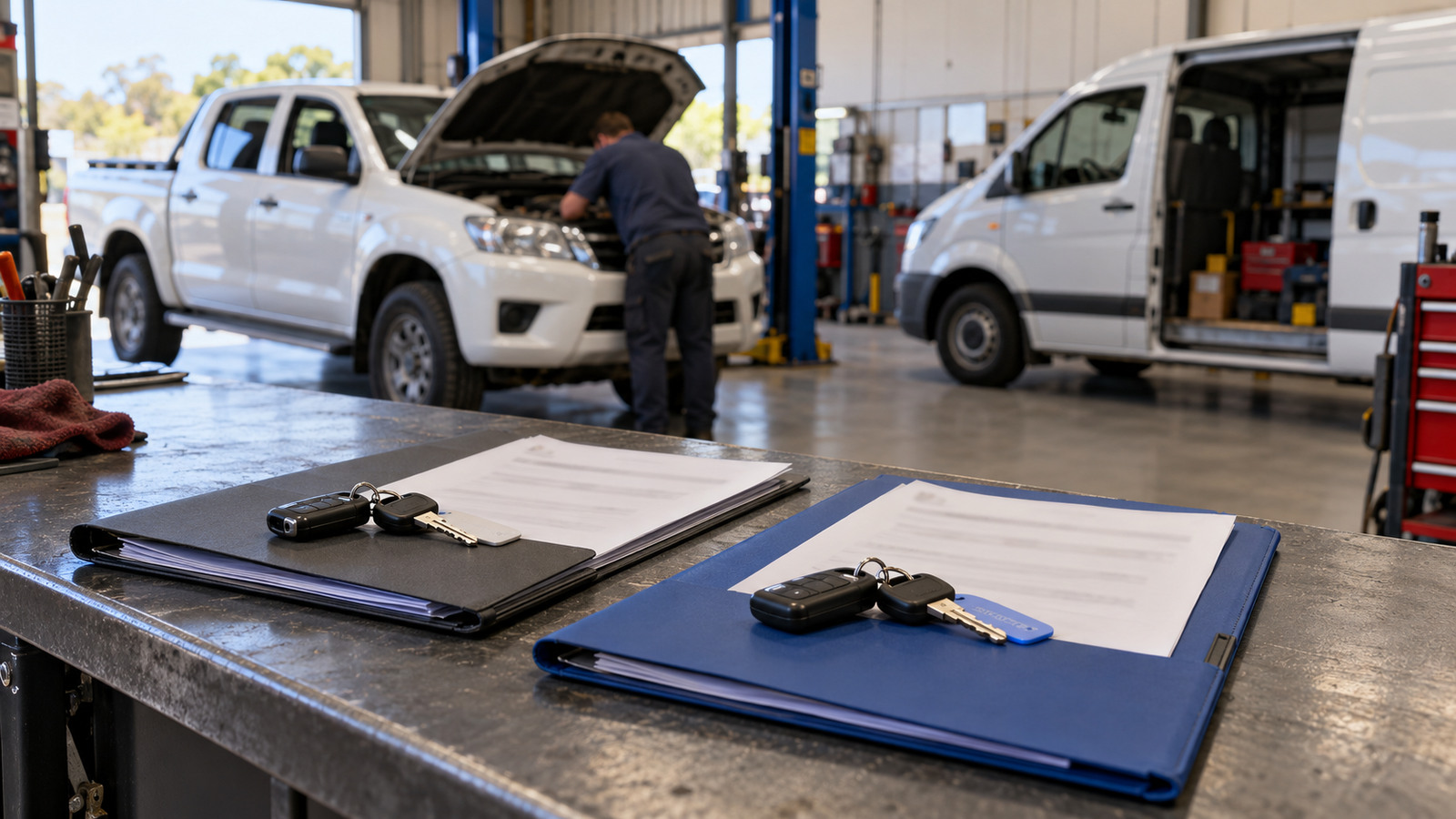
Keep one record for each vehicle that holds its service history, itemised invoices, the next service due and any reported faults. Give one person the job of following each open fault through to a confirmed repair. A completed service and a reported fault are different records, and a stamped logbook only covers the first.
A logbook entry records that a service happened. It shows the date, the odometer reading and the work the schedule called for. It does not say anything about the rattle a driver noticed on Tuesday.
An itemised invoice does a different job. It shows what work was done and charged, including repairs that sit outside the schedule. A driver’s fault report does a third job: it records something a person saw, heard or felt that still needs following up.
No single document proves that every fault has been fixed, or that a vehicle suits every kind of use. Together, the three show what has been done and what is still open. That second part is easy to lose track of.
A small fleet does not need special software. A folder or a single spreadsheet for each ute or van works, as long as the same fields are filled in every time. These are suggested fields, not a legally prescribed form.
Keep the invoice or service paperwork attached to the entry instead of summarising it from memory. WorkSafe Victoria’s guidance on planning for safe work-related driving says employers should prepare procedures for the frequency of vehicle safety checks, so that problems can be reported, and keep records of maintenance documents. It does not set out a form or a retention period, so treat the table as a practical starting point.
| Record | What it helps you track |
|---|---|
| Vehicle ID or registration | Keeps every entry attached to the right ute or van, even when two vehicles look alike |
| Service date and odometer | Shows when the vehicle was last serviced and how far it has travelled since |
| Work completed and invoice reference | Links the entry to the itemised invoice, so you can see exactly what was done |
| Next due date or distance | Shows what is coming up, taken from the logbook or service schedule |
| Reported fault and date | Captures what the driver noticed and when they first noticed it |
| Person following it up | Names who is responsible for getting the fault assessed |
| Assessment and repair close-out | Records what the workshop found, what was done and the date the fault was closed |

Take a made-up example. A Colac contractor’s van has a rear light that flickers on the drive home from Apollo Bay but works fine in the yard.
The driver writes down what they saw: which light, when it flickered and what the weather was doing. The business logs the report with the date and names one person to follow it up. That person books the van in for assessment. The workshop checks the light and its circuit and reports what it finds. After the repair, the entry records the work done, the invoice reference and the date the fault was closed.
The log does not guess the cause. A flickering light is not always a blown globe, and a tick in a spreadsheet does not make a van roadworthy. Intermittent electrical faults need a proper assessment.
If a fault could make the vehicle unsafe, such as a brake light that stays off, decide first whether the van should be driven at all or moved by other means. The paperwork comes second.
An unplanned repair and a scheduled service should both stay visible on the same vehicle record. A ute that has just had a repair is not automatically up to date on its next service. A fresh service does not mean an earlier fault was dealt with.
Keep the “next due” field and the “open fault” field separate, and check both when a vehicle comes back. The vehicle’s logbook servicing schedule sets what is due. The record only needs to show it. Working out when each vehicle is due is a separate job from keeping the evidence together.

A workshop records what it did to the vehicle. It cannot follow up an issue that a driver reported to the business last month, because it only knows what has been brought in.
WorkSafe’s guidance is addressed to employers, so keeping the system running is the business’s job, not the workshop’s and not whoever last had the keys. Name one person who reviews the open faults and keeps the evidence, even if a different driver takes the van next week.
At a handover, check three things:
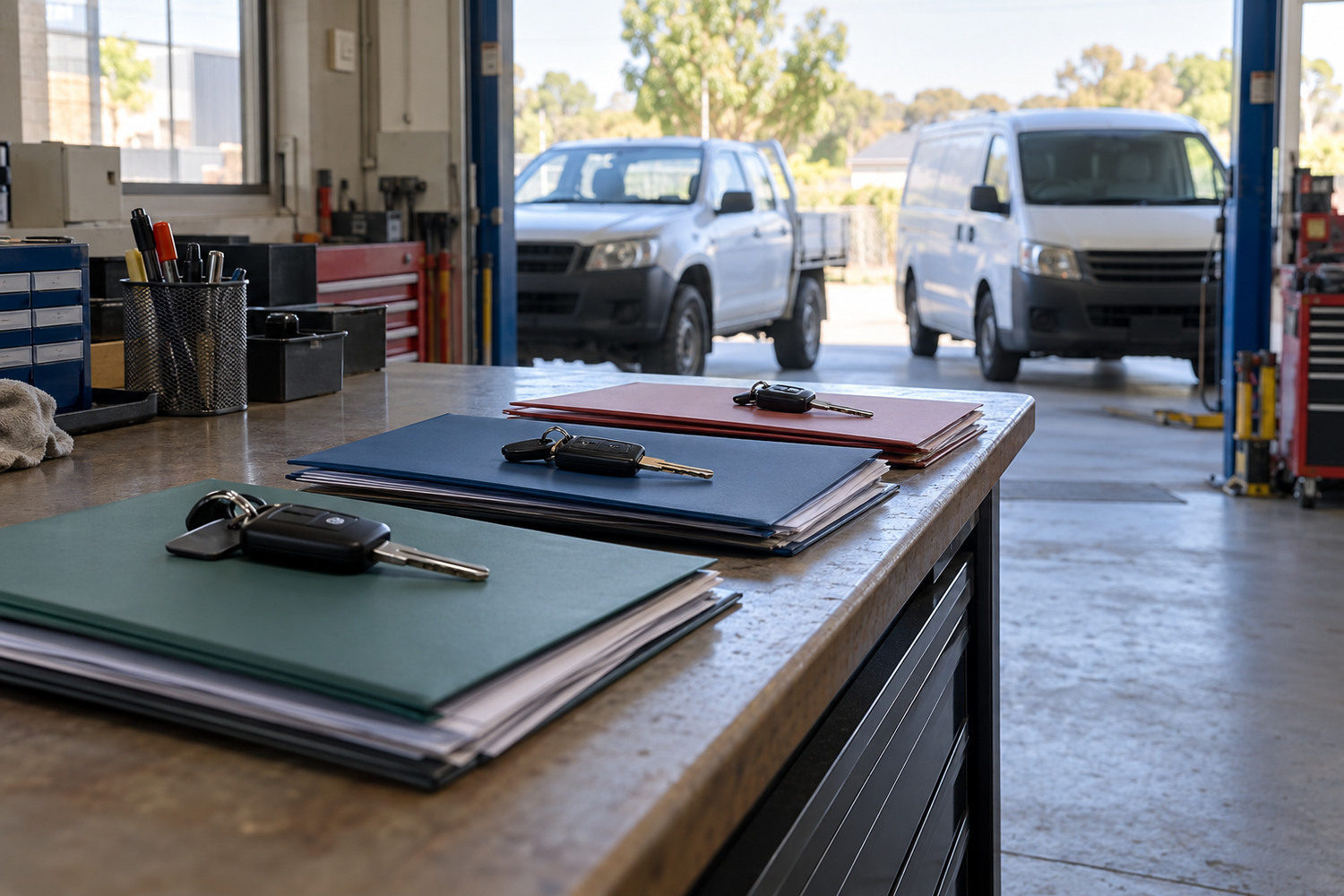
Records are only useful if the service evidence arrives with them. When a vehicle is serviced here, the logbook is updated and the service records come back to you, so there is something to attach to each entry. We do not run your fleet administration. Our part is the service evidence for the work done in the workshop.
You do not need a finished set of records before you get in touch. Start with the paperwork you already hold and add the next invoice to each vehicle’s entry as it arrives.
Our team at Callahan Vehicle Maintenance looks after fleet servicing in Colac and the Otway region from our workshop at 44 Hugh Murray Drive. If a vehicle has a fault that makes it unsafe to drive, arrange safe transport or assessment first. Once the vehicle is safe to move, you can book online. The form sends us an enquiry, so include the vehicle, the fault and when it was first reported.














Website By CJ Digital


