
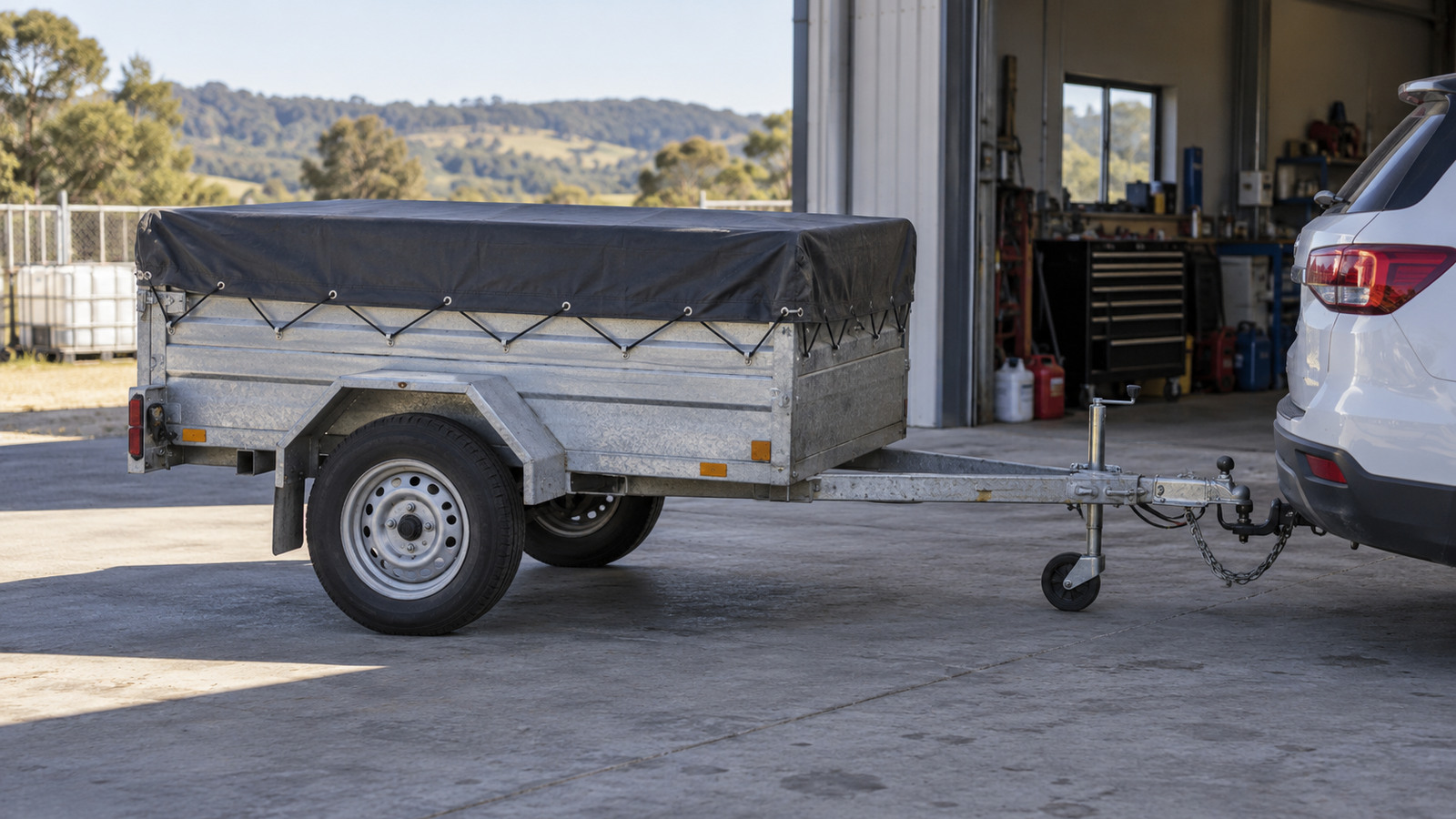
A bearing, brake or light fault needs attention on its own merits. Working lights do not make up for a noisy hub, and good brakes do not excuse a dead tail lamp. If a trailer is noisy, hot, braking poorly or showing a light fault, have it assessed before the next tow, because trailer servicing in Colac starts with working out which of those faults is the real problem.
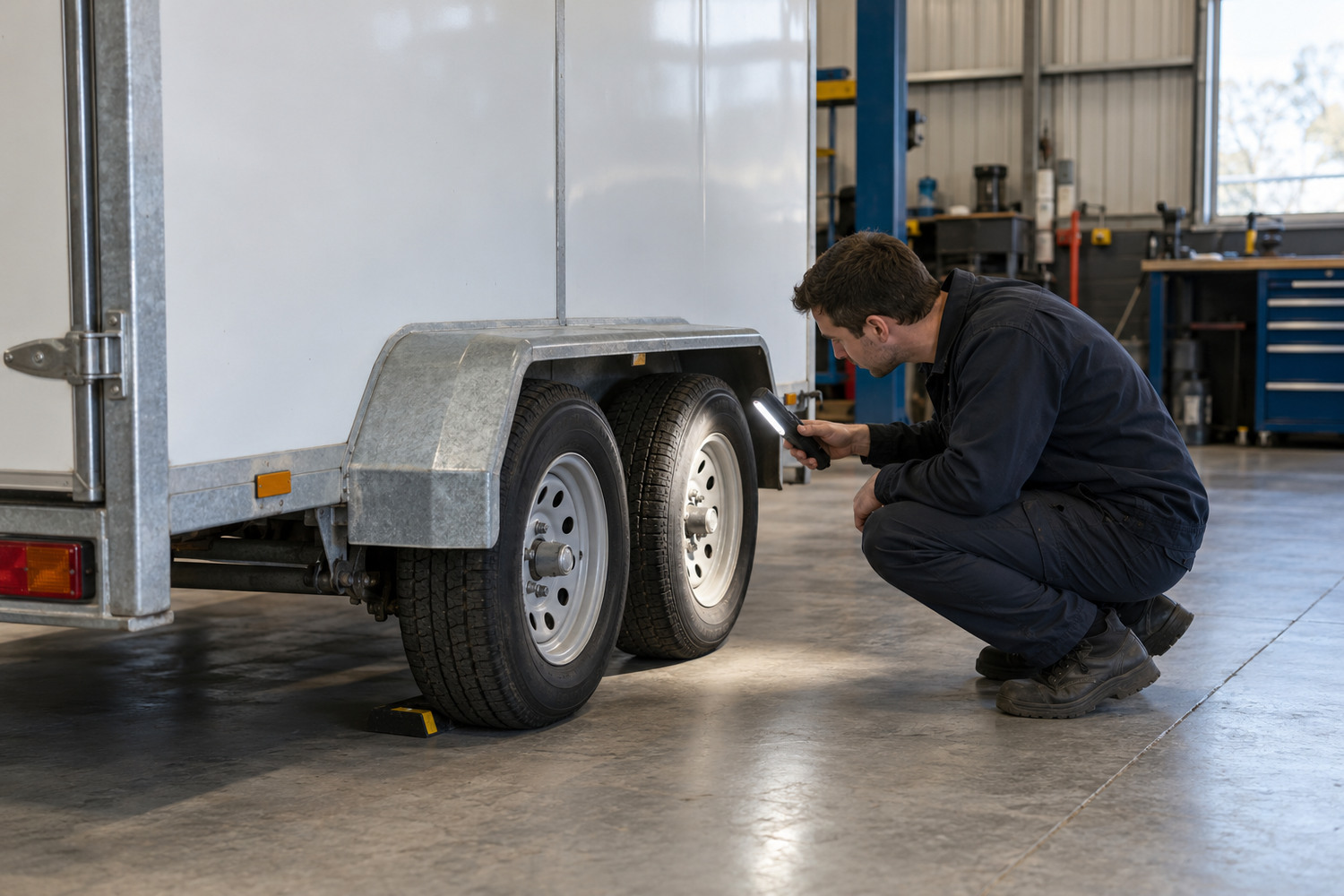
A wheel bearing lets a trailer wheel spin freely on its axle. Most trailer hubs hold bearings packed with grease and protected by a seal. Grease breaks down with heat and age, seals can let water in or grease out, and bearings wear. A boat trailer that goes into the water at Apollo Bay or Lorne meets moisture in a way a box trailer parked in a Colac yard never does. Those are reasons bearings fail, not a timetable. No single distance or number of years applies to every trailer.
Signs that a hub needs looking at:
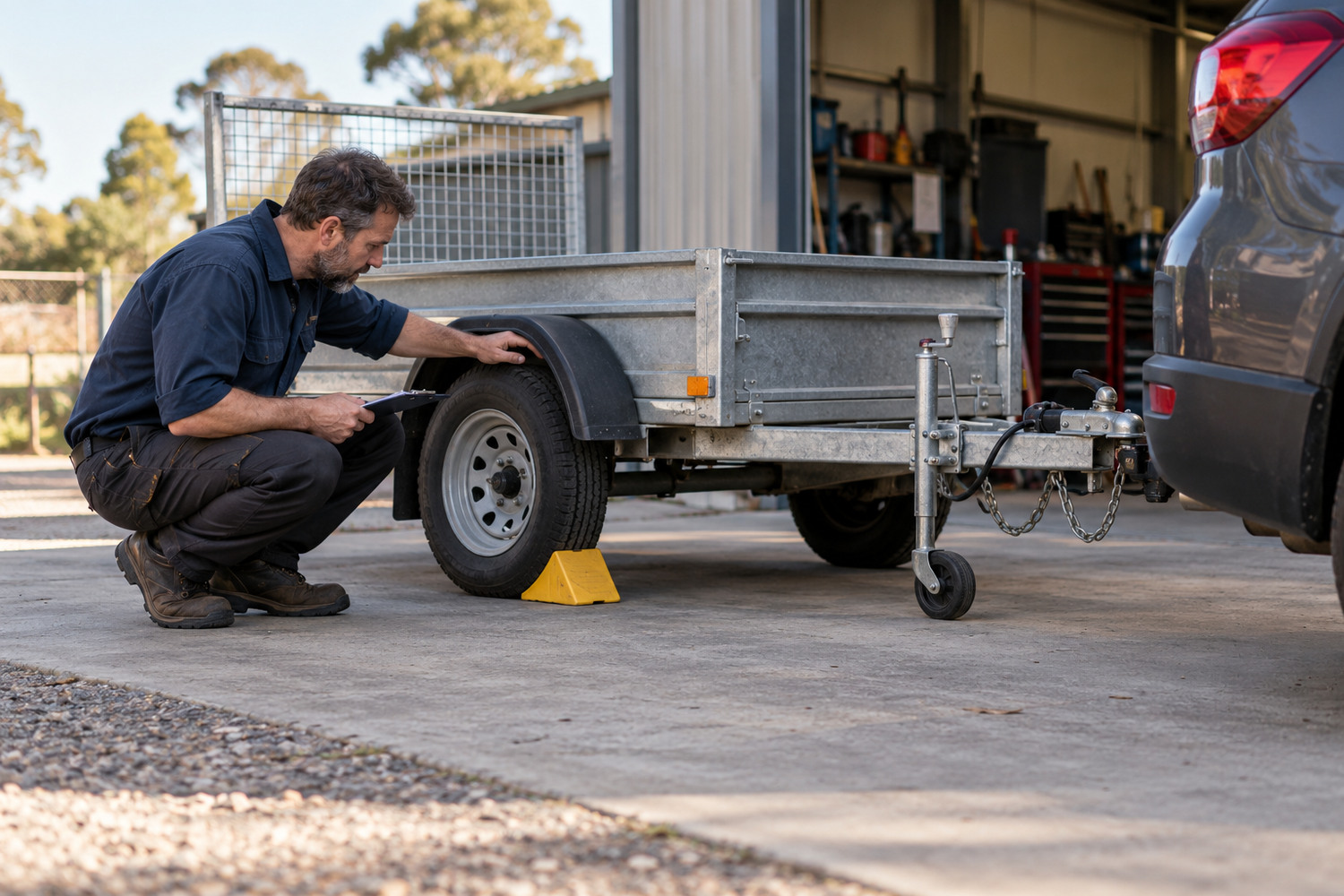
None of these proves a bearing has failed. Heat and noise can also come from a brake that is dragging, and a grease leak can mean a seal has failed. A bearing repack, which means cleaning out the old grease and refilling the bearings, will not fix a worn bearing or a sticking brake. The first job is working out which problem you have. That means getting the wheel off the ground safely, which is workshop work. Do not jack the trailer up and crawl underneath to find out.
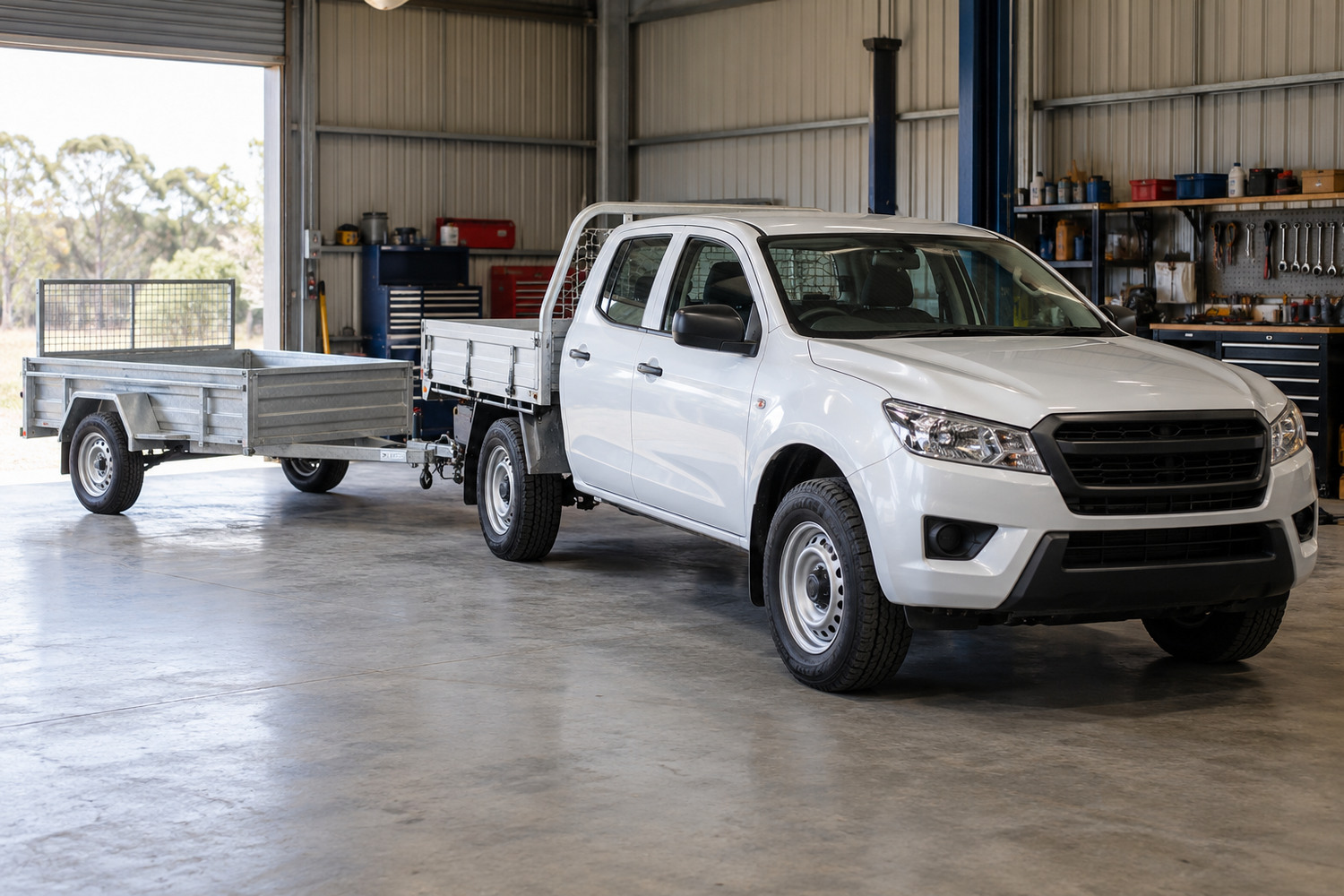
A trailer’s brakes only help when they work together with the tow vehicle’s brakes. Electric brakes are applied through a controller in the tow vehicle, which sends a signal along the wiring to each wheel. Override brakes are applied by the trailer pushing against the tow vehicle as it slows. Some trailers use mechanical linkages instead. Which type your trailer has decides what gets checked.
Because the systems differ, a complaint such as trailer brakes not working is a starting point, not a diagnosis. The cause might be worn friction parts, a wiring or connection fault, a problem with the controller in the tow vehicle, or a brake that is dragging when it should be free. Signs to take seriously include weak braking, a trailer that pushes the tow vehicle or pulls to one side when you slow down, and brakes that grab.
A proper inspection looks at the brakes on the trailer and how they respond with the tow vehicle. Adjusting settings, bypassing a part or testing on the road is not a fix to attempt on the roadside.
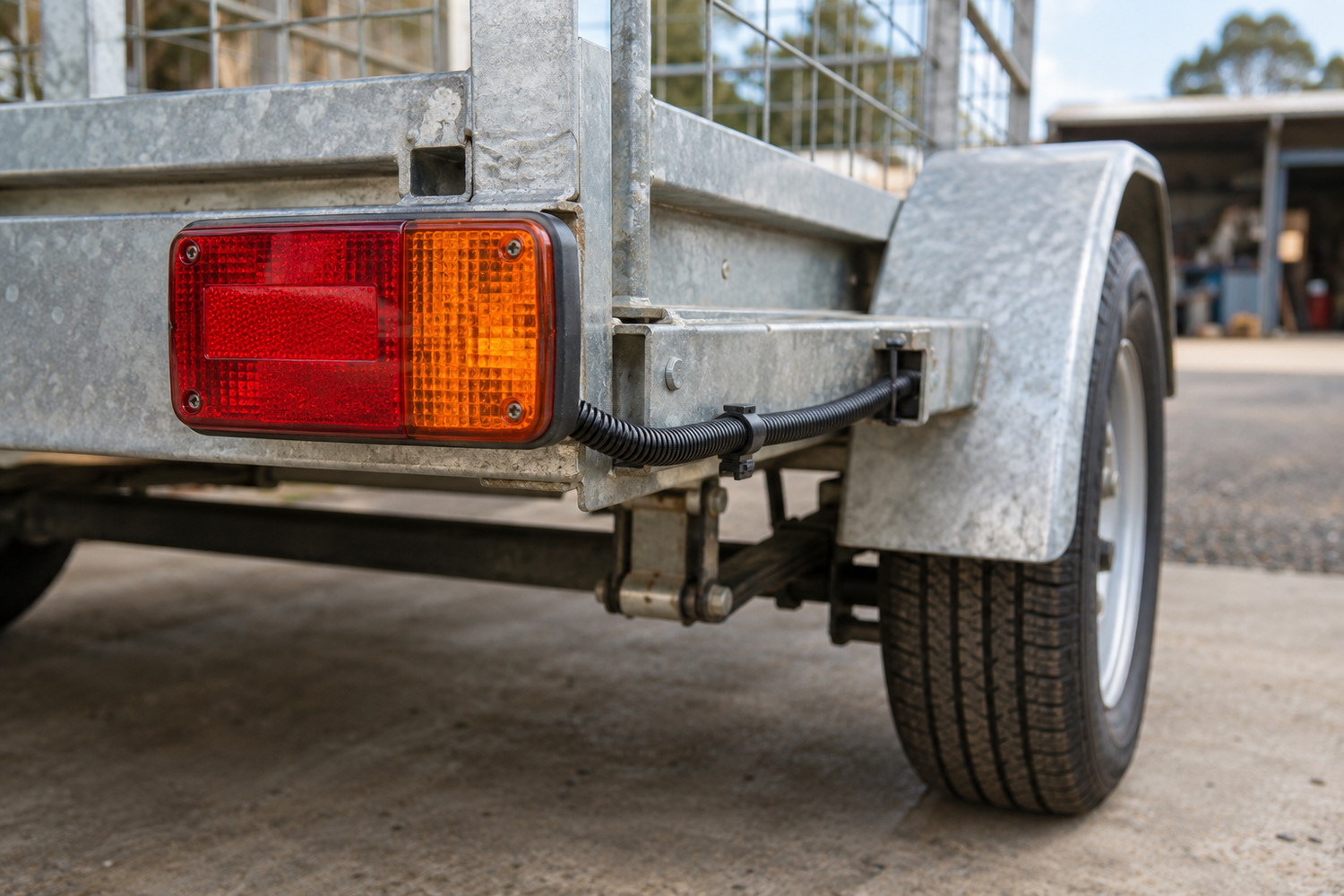
Trailer lights get power from the tow vehicle through a plug and socket, then through wiring along the trailer to each lamp. A fault can sit anywhere along that path. It might be the lamp, damaged wiring, a corroded or bent pin in the plug, a poor earth connection, or the socket on the tow vehicle.
A new globe is a reasonable first try. If it does not fix the problem, or the lights flicker or only work when the plug is moved, the fault is further along and needs proper diagnosis. That can include the tow vehicle’s wiring as well as the trailer’s.
With the trailer parked and connected, a second person can watch whether the tail, brake and indicator lights respond. That check shows a fault when one exists. It does not show the rest of the trailer is sound. Lights tell drivers behind you when you are slowing or turning, so a light fault is a safety problem, not only an inconvenience.
Some faults mean the trailer should stay where it is. This table is a guide to urgency, not an inspection certificate. A trailer that shows none of these signs can still have a problem.
If you cannot tell whether the trailer is safe, treat it as not safe. A short trip is not a safer trip. Arrange transport or have it looked at where it stands, rather than towing it to make an appointment. Tyre damage such as a bulge or exposed cord needs a tyre specialist, because we do not fit tyres. Gas, mains-voltage and living-area problems in a caravan belong with a licensed tradesperson for that work.
| What you notice | Why it matters | What to do |
|---|---|---|
| Grinding or rumbling from a wheel | May be a worn bearing or a dragging brake, and sound alone cannot tell which | Stop towing and have the hub assessed |
| One wheel hot after a short trip | Heat can come from a bearing or a brake that is not releasing | Let it cool, do not tow it on, and book an assessment |
| Grease around the hub or drum area | A seal may be leaking, which can contaminate the brake | Have it assessed before the next tow |
| Weak braking, grabbing, or pulling to one side | The trailer may not be slowing evenly with the tow vehicle | Stop towing until the brakes are checked |
| No brake response on an electric system | Could be the controller, wiring, plug or the brakes themselves | Do not tow until it is diagnosed |
| Lights not responding, or flickering | Drivers behind cannot see you braking or turning | Have the wiring and plug checked before towing |
| Damaged or loose coupling parts | The coupling is the connection between trailer and tow vehicle | Do not tow it |
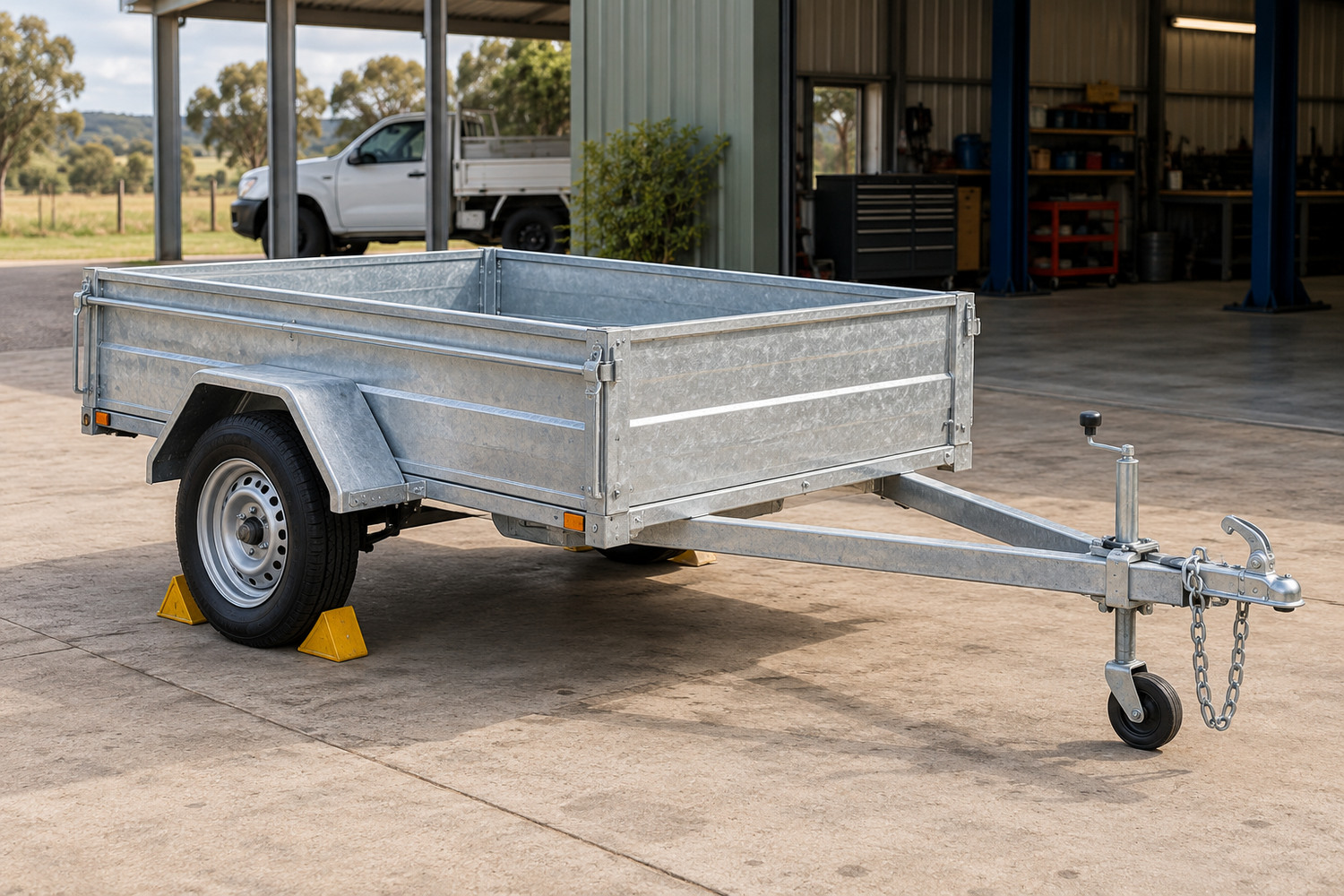
We service box, boat, car, horse and trade trailers, along with suitable light commercial and farm trailers, at our workshop at 44 Hugh Murray Drive, Colac. Camper trailers and caravans have the same running gear, so the same checks apply. Heavy articulated trailers are outside our work.
An inspection of the trailer’s running gear covers the hubs, brakes and lights you have noticed a problem with, and we confirm the scope for your trailer before work starts. If the trailer is not safe to tow, say so in your enquiry and we will talk through how to get it to us.
To book online, use the contact form and tell us:
The form sends us an enquiry, and we confirm the job with you from there.












Website By CJ Digital


