
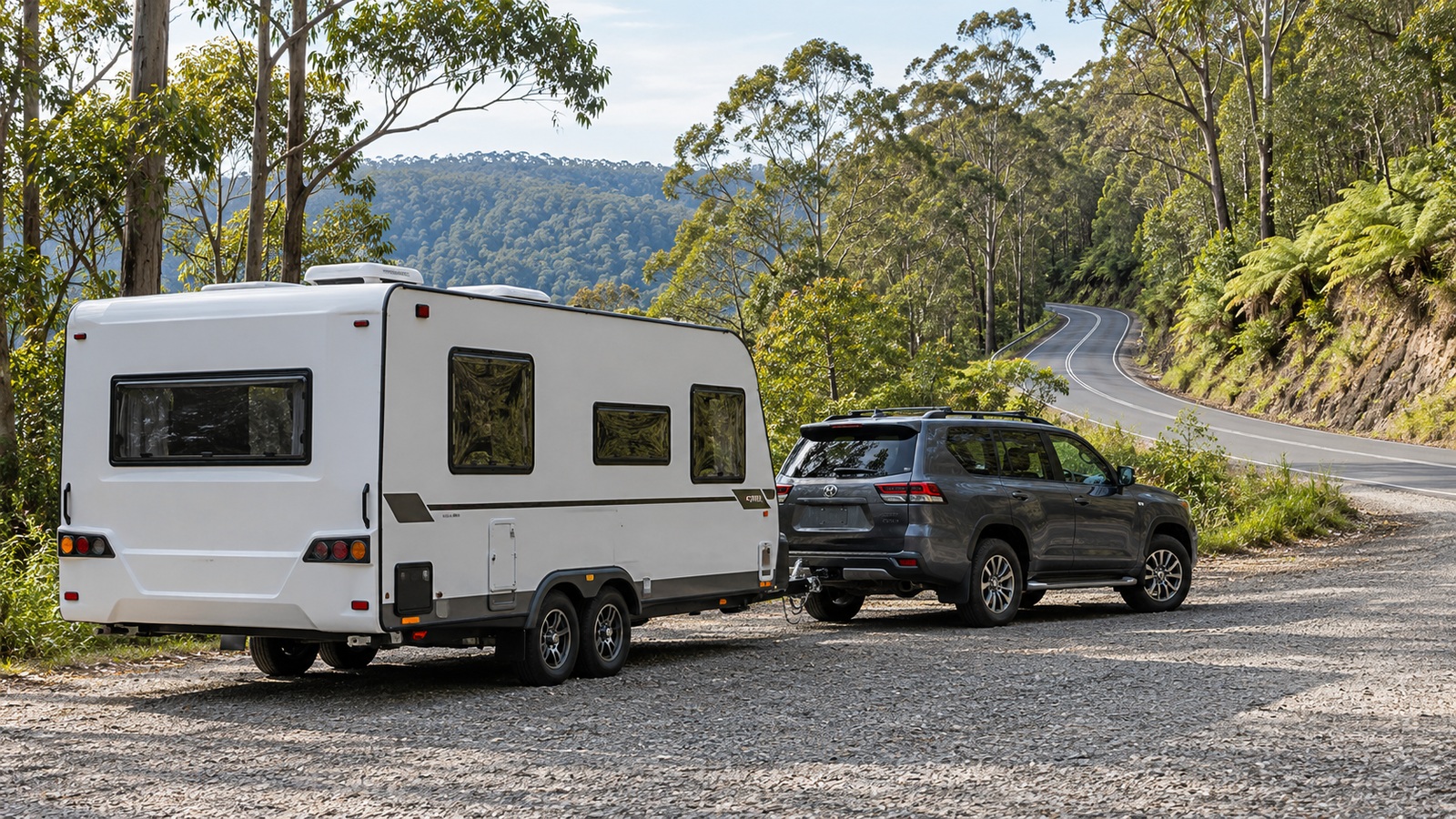
A gauge that rises on an Otway climb can reveal a cooling fault that flat driving hides. Towing adds engine load while slower travel reduces airflow through the radiator. Cooling system repairs in Colac start with finding that lost cooling capacity, even when the coolant bottle looks full. If the car is overheating now, pull over safely, switch the engine off, and arrange help.
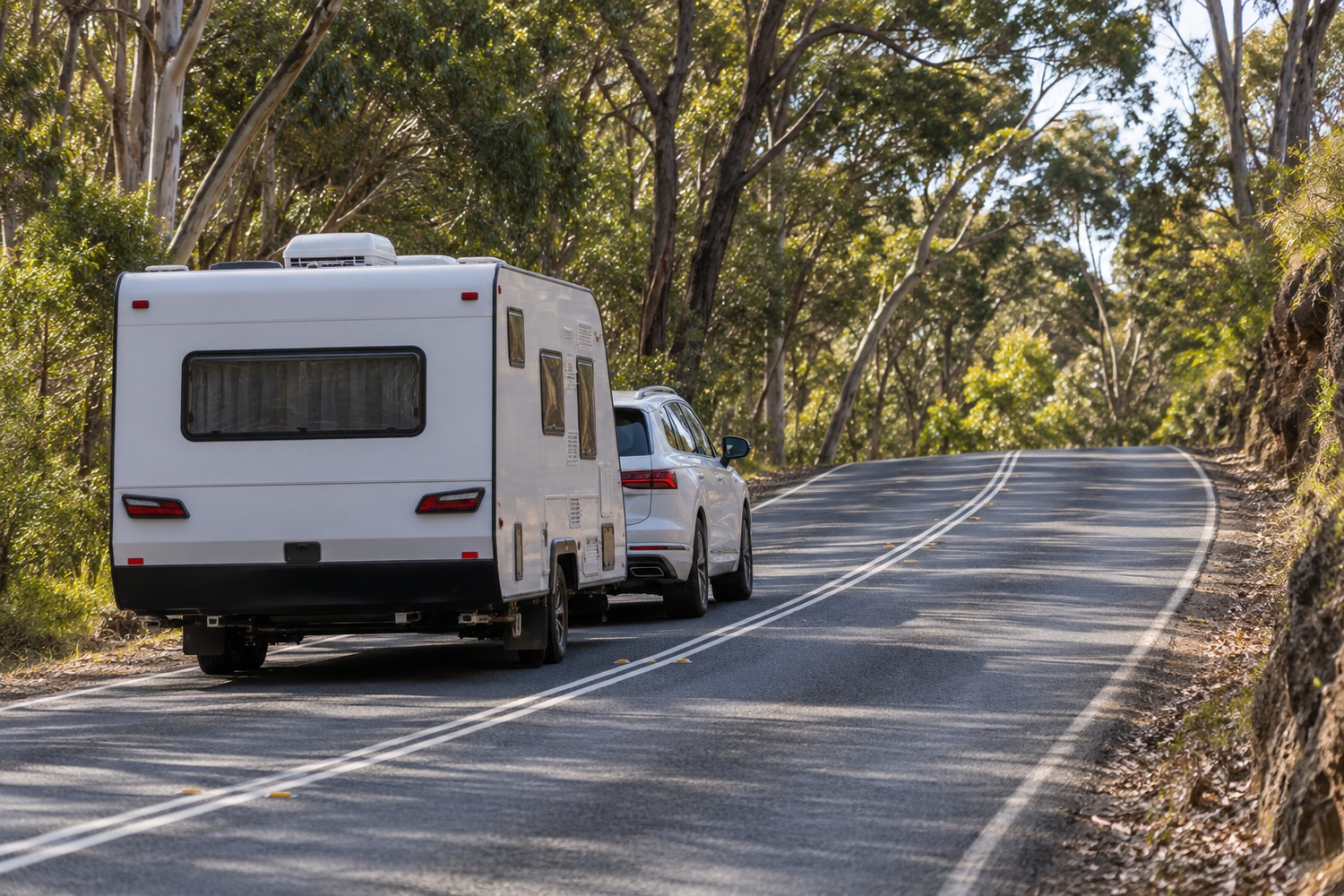
A climb asks the engine to make more power for longer. That produces more heat, which the cooling system must carry away.
Coolant is the fluid that takes heat from the engine to the radiator. Air passing through the radiator carries that heat away. A fan helps supply airflow when the car’s movement cannot provide enough.
On the Colac-Lavers Hill Road, a long climb can expose a weakness that never shows around town. Add a caravan, and the engine has more weight to pull uphill. Slow for bends, and less air passes through the front of the car. The cooling system has to meet both demands together.
A partially blocked radiator might cope with ordinary driving and struggle under that load. A thermostat, the valve controlling coolant flow, might not open fully. Either problem can leave enough cooling for the flat and too little for the climb.
The temperature falling after the crest is useful evidence. It tells the mechanic when the problem appears. It does not prove the fault has gone away.
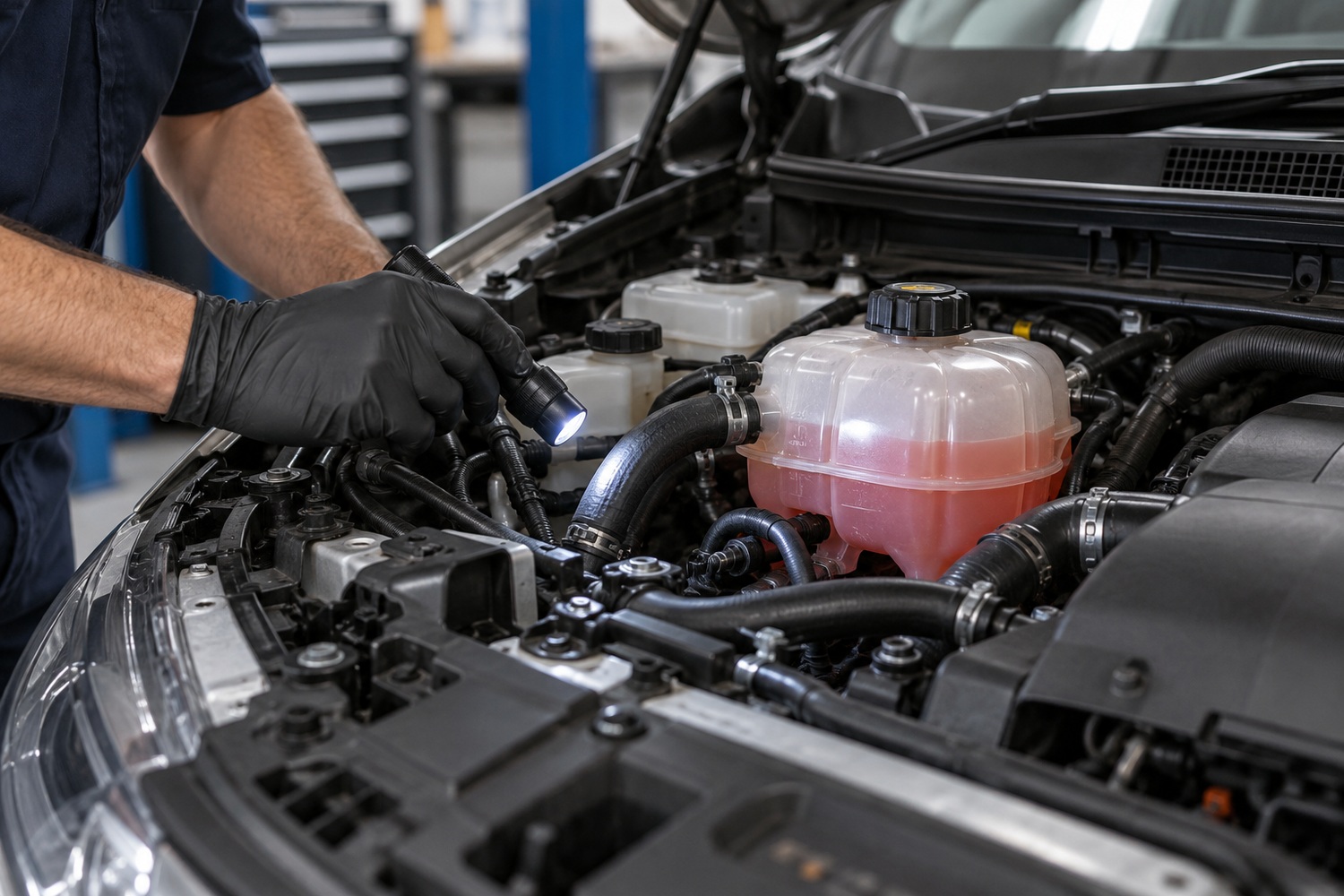
Coolant quantity is only one part of cooling. The fluid also has to circulate, release heat, and remain under the correct pressure.
Dust, insects, and chaff can restrict airflow through the radiator. Deposits inside it can restrict coolant flow. A damaged water pump, which circulates coolant, can have a similar effect. A fan fault often becomes more noticeable as road speed falls.
These patterns guide the investigation. None identifies a failed part on its own.
| What you notice | What needs checking | What to do |
|---|---|---|
| Temperature rises on a sustained climb | Radiator airflow and flow through the cooling system | Arrange an inspection before another loaded trip |
| It runs hotter at low speed than on the open road | Cooling fan operation and airflow restriction | Have the pattern checked; stop if it overheats |
| Trouble began after cooling-system work | Correct filling and trapped air | Return for a check before towing again |
| The bottle stays full while temperature rises | The system’s true coolant level and recovery function | Do not treat the bottle as proof it is safe |
| A warning appears, the gauge reaches red, or steam escapes | An active overheating event | Stop safely, switch off, and arrange assistance |
Worth knowing: Some cars use a separate, non-pressurised recovery bottle. Coolant should return from that bottle as the engine cools. If the return path fails, the bottle can hold coolant while the radiator is low. Other cars use a pressurised expansion tank. Follow the handbook for your car; never open either type while hot.
A pressure cap also matters. It helps the system hold its working pressure. A bottle reading cannot tell you whether the cap, pump, or thermostat is working. Equally, a rising gauge does not diagnose a head gasket fault. Testing comes before a conclusion.
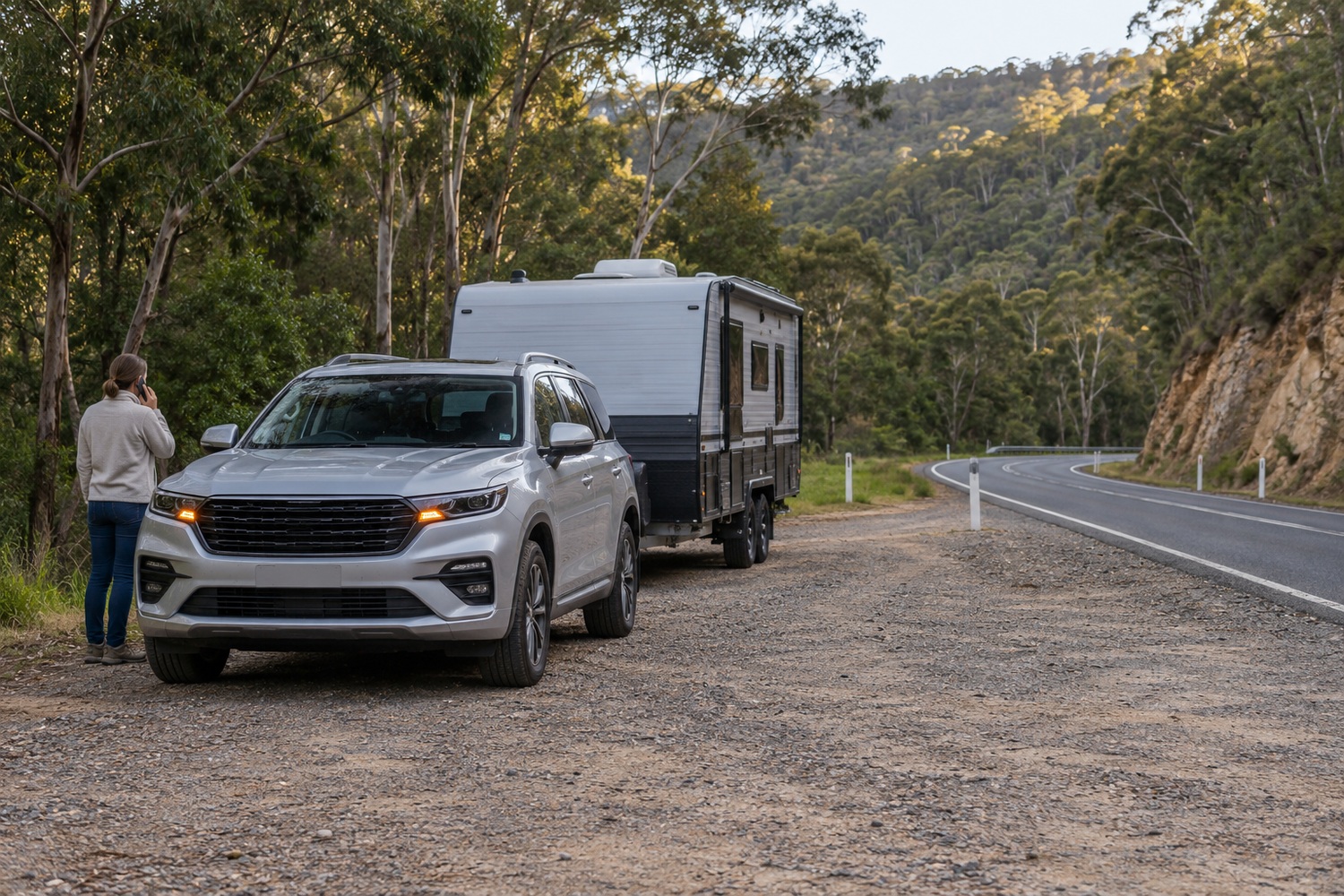
An overheating warning calls for a safe stop. The summit, the next town, or a downhill stretch is not a repair.
Ease off the accelerator and look for a safe place clear of traffic. Switch the aircon off while you pull over. Keep your attention on the road, especially with a van behind. Do not stop on a blind bend if you can safely reach a nearby stopping place.
Once safely stopped, switch the engine off and use the hazard lights. Follow any specific instruction in the vehicle handbook or dashboard message. Engine-temperature and gearbox-temperature warnings can require different responses; guessing from one to the other is unsafe.
Leave the radiator and coolant-tank caps alone while the system is hot. Hot coolant is under pressure and can scald when released. Keep clear of escaping steam. A set number of minutes does not tell you the system is safe to open.
Arrange roadside assistance and describe your location, direction of travel, and any trailer attached. A road name and the last signed intersection are more useful than ‘somewhere in the Otways’. Tell the operator if the stopping place leaves you exposed to traffic. Follow their advice about where to wait.
Do not restart an overheated engine simply because the gauge has dropped. Get advice on recovery. Driving over the next rise to test it risks repeating the same event farther from help.
Getting over the hill does not tell you whether the car is ready for the next one.
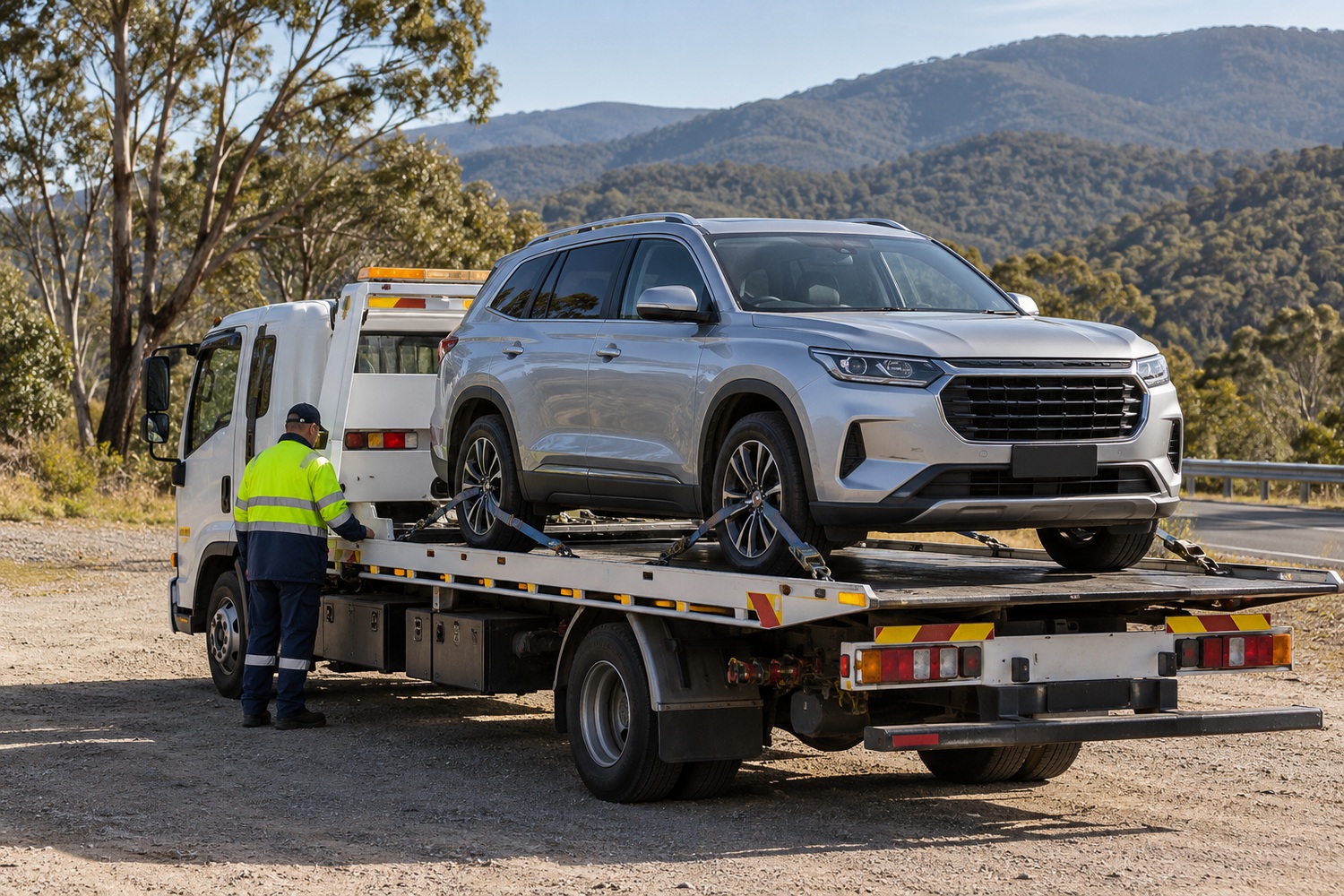
There is no safe distance that applies to every car or fault. A red gauge, temperature warning, steam, or coolant escaping means stop safely and arrange help. Do not aim for Colac with an active overheating problem.
A small movement within the car’s normal operating range is different from overheating. Gauges and warning systems vary, so the handbook is the reference. If yesterday’s needle movement has settled, with no warning or coolant loss, describe it to the workshop before another towing trip. An unusual change still deserves investigation.
Cooling down removes heat; it does not restore a failed fan or clear a blockage. A downhill run can make the gauge fall without correcting either. It also gives you bends and braking to manage, so it is a poor place to find out whether the fault returns.
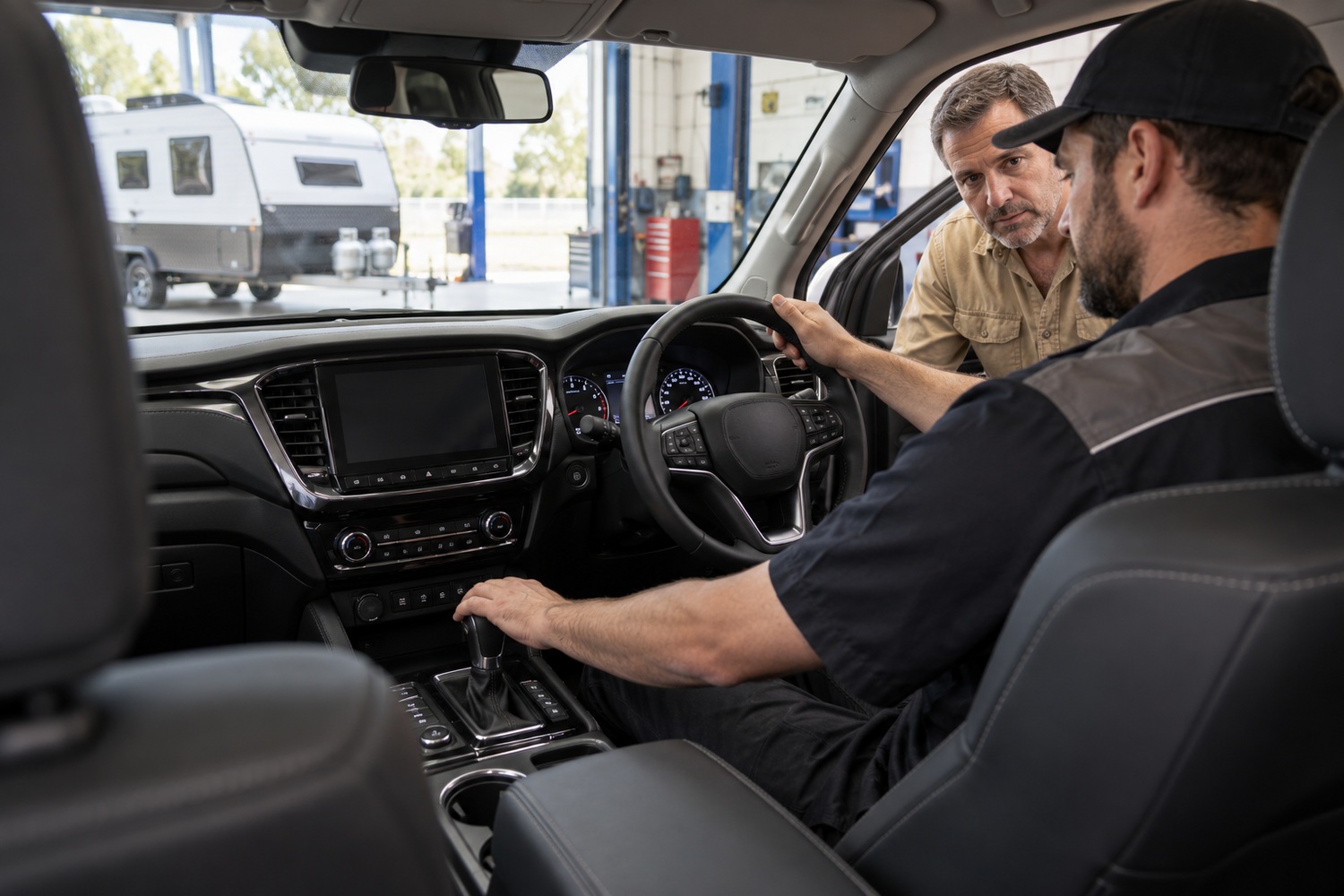
An automatic gearbox also generates heat while pulling a load. Engine and gearbox temperatures are separate readings, even where their cooling systems exchange heat through related components. A normal engine gauge does not rule out a gearbox warning.
Use the vehicle’s own towing instructions rather than a universal gear rule:
Gear selection can help manage load. It cannot make a cooling fault safe. Changing the radiator or adding equipment before finding that fault can leave the original problem untouched.
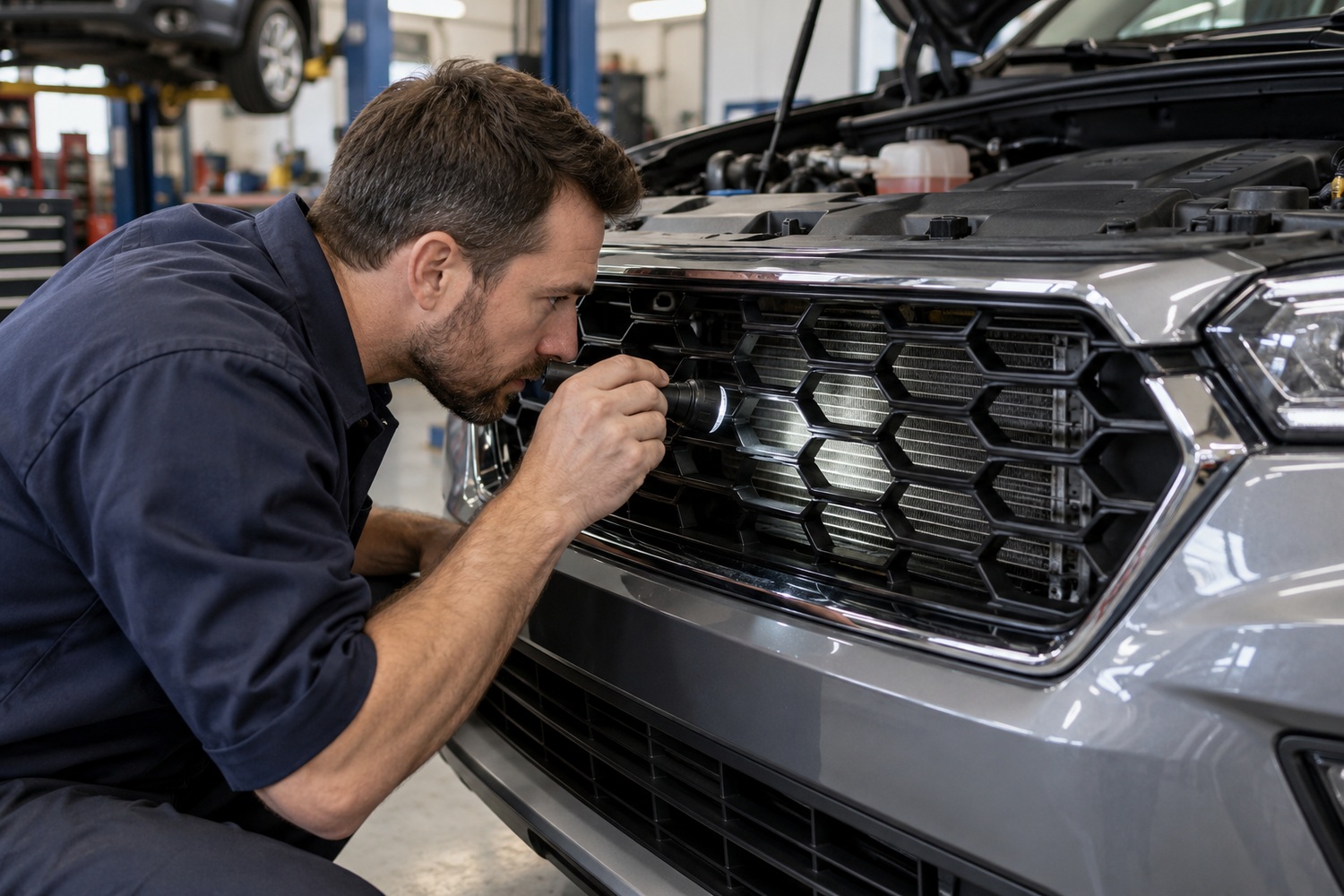
The investigation needs the driving pattern as well as a look under the bonnet. An engine idling in a workshop bay is not doing the same work as one pulling a caravan uphill.
A cooling system check can include coolant condition, leaks, the pressure cap, radiator condition, and fan operation. The mechanic may need further testing under suitable conditions to reproduce the fault safely. That is different from asking you to take it out and make it overheat again.
Tell the workshop whether it happened towing, at low speed, or near the end of a climb. Mention any recent cooling-system work. Those details help separate an airflow problem from a circulation or pressure problem before parts are replaced.
For cooling system repairs in Colac, book online through Callahan Vehicle Maintenance’s contact form. Include the vehicle, the warning you saw, and when the temperature changed. If the car is overheating now, arrange roadside help first rather than driving it to the appointment.
Reaching flatter ground reduces the work the engine must do. That can bring the heat produced back within a weakened system’s capacity. The change helps explain the pattern, but does not show which component needs attention.
No. The level says nothing about how well the radiator sheds heat or whether coolant is circulating properly. On recovery-bottle systems, a return problem can also leave the bottle reading out of step with the radiator.
No. Tell the workshop what happened on the original trip. A useful description lets the mechanic decide how to test the car without asking you to provoke another overheating event.












Website By CJ Digital


