
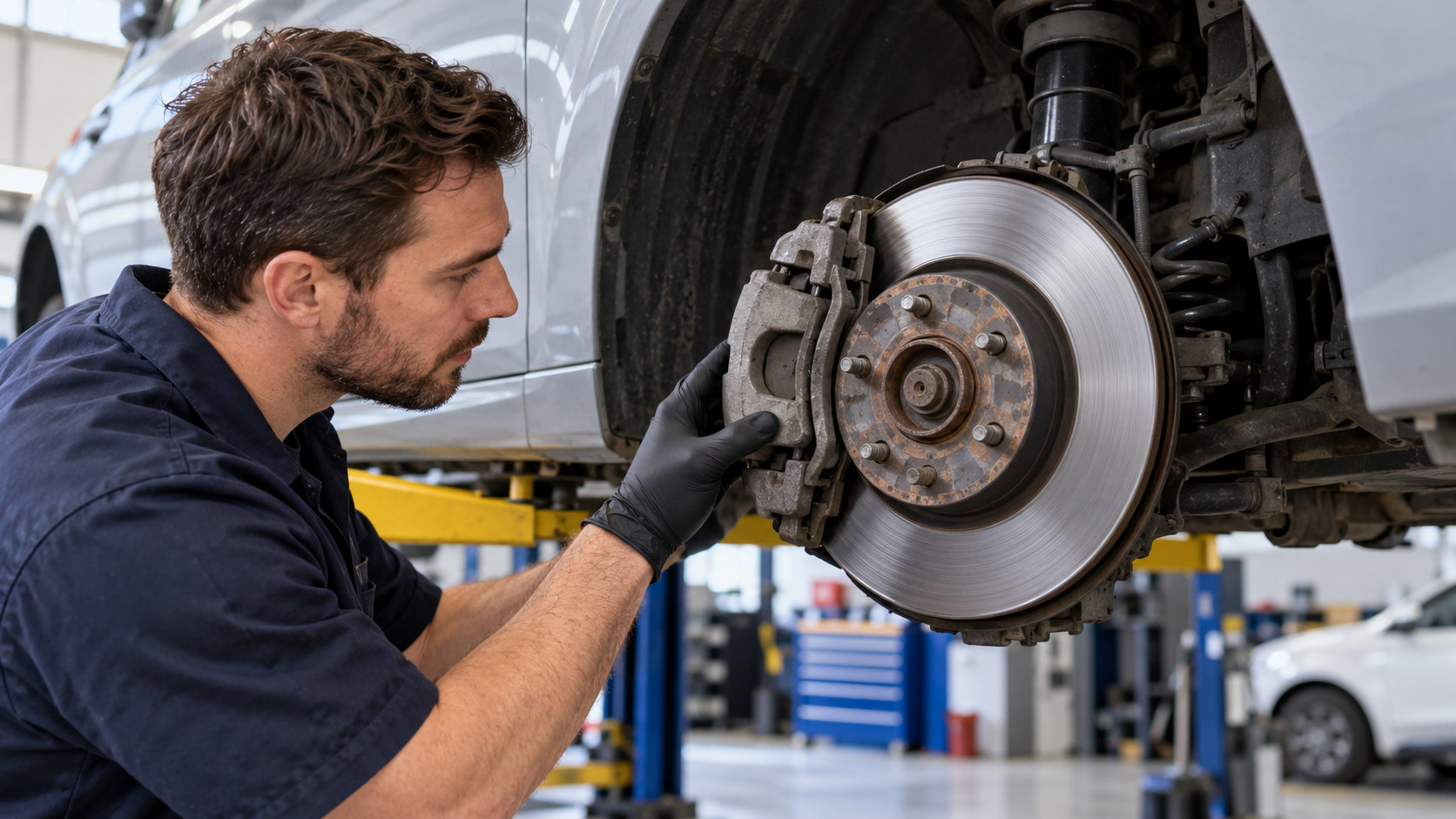
Many drivers find out from a noise. The noise is late in the story though. Three quieter signals come first: a pedal that sits lower than it used to, a brake fluid level that has slowly dropped, and pads you can see are thin through the wheel. Reading those tells you whether you have months or weeks, and it is what turns brake repairs in Colac into planned work instead of a bad morning.
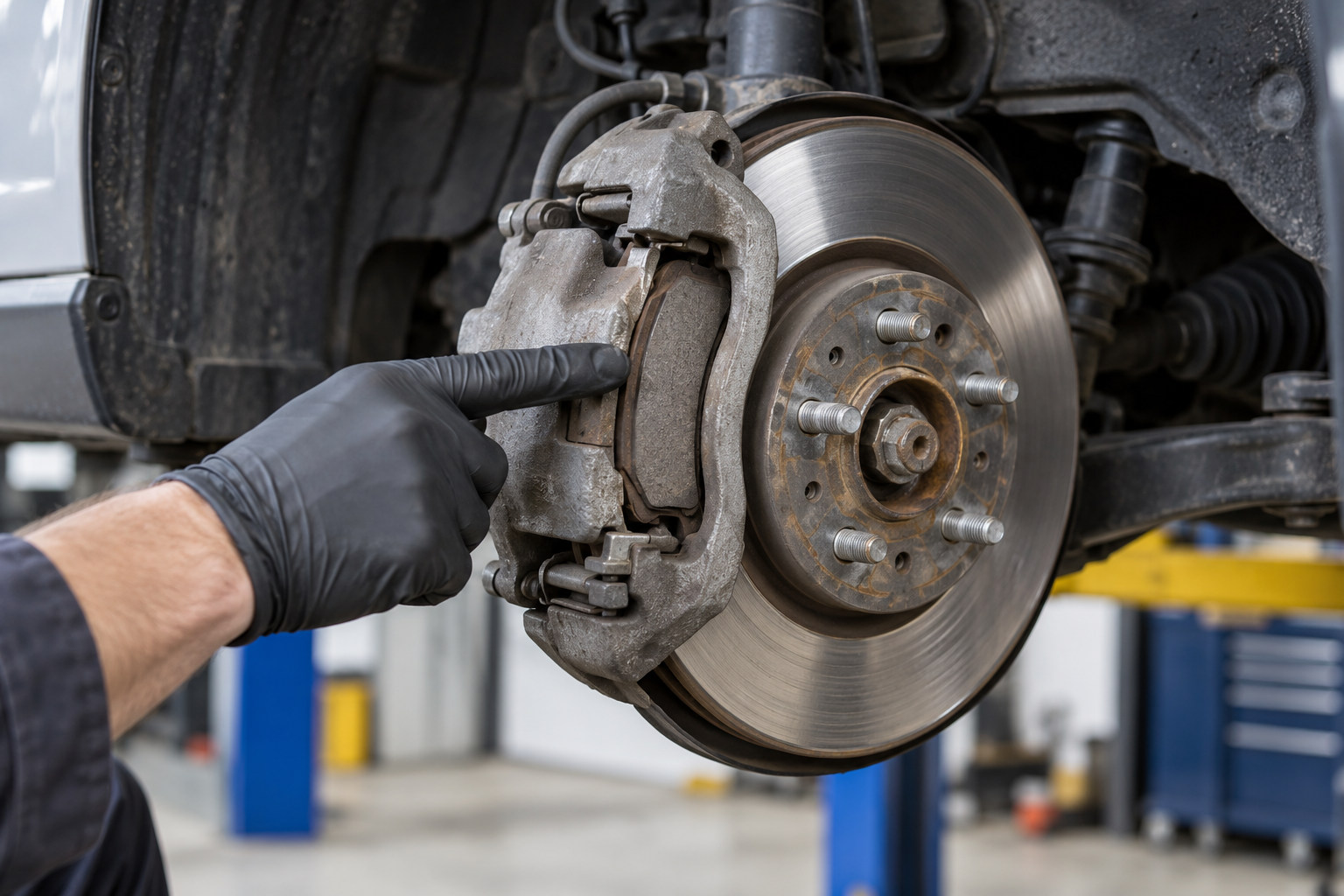
Brake pads are a consumable: blocks of friction material squeezed against a spinning metal rotor, losing a little of themselves every time you stop. So every set of brakes on the road is partly worn. The question is not whether they are worn, but whether they are past the point where the next few months are safe.
Brakes are also three wear items rather than one, and each runs on its own clock.
Pads wear by use. Stop-start driving eats them fastest, and steady highway running barely touches them.
Rotors wear by use too, but far more slowly, losing a little thickness each time a set of pads works against them. Every rotor has a minimum thickness, and on most cars it is cast into the rotor where a mechanic can read it.
Brake fluid wears by time instead. It draws moisture out of the air, and water in the fluid lowers the temperature at which it boils. A car that sits all year still has fluid getting older. Many carmakers set a change interval of about two years, and the figure for your car is in its logbook.
Three clocks, three answers. That is why brakes get checked during a routine service rather than only when something starts making a noise.
Brakes rarely fail in one moment. They work through a rough sequence, and where your car sits in it is the real answer to how long you have got.
One term first. A wear indicator is a small metal tab set into the pad. When the friction material gets low, the tab touches the rotor and makes a noise on purpose.
| The signal | What it usually means | Where it sits in the order |
|---|---|---|
| The pedal sits lower than it used to | The pads have thinned, so the pistons travel further | Early, often months before you hear anything |
| The fluid level in the reservoir has slowly dropped | Fluid has followed the pistons out towards the pads | Early, and it moves along with the pads |
| The outer pad looks thin through the wheel | The friction material is getting close to its limit | Middle, and the first sign you can see |
| A squeal on some stops but not others | Surface rust, road dust, or an indicator starting to touch | Middle, and worth watching rather than worrying about |
| A squeal on every stop that gets louder with pedal pressure | The wear indicator is doing its job | Late, and the point to book |
| A brake warning light, on cars fitted with a pad sensor | The sensor wire buried in the pad has worn through | Late, and not every car has one |
| Grinding | The friction material has gone and metal is running on metal | Last, and it cuts the rotor while it does it |
The sequence is rough and some cars skip steps. If nobody has been watching the pedal or the fluid, grinding can be the first thing anyone notices.
Grinding is not an early warning. It is the sound of the job getting dearer.
None of this needs tools, and none of it needs the car lifted.
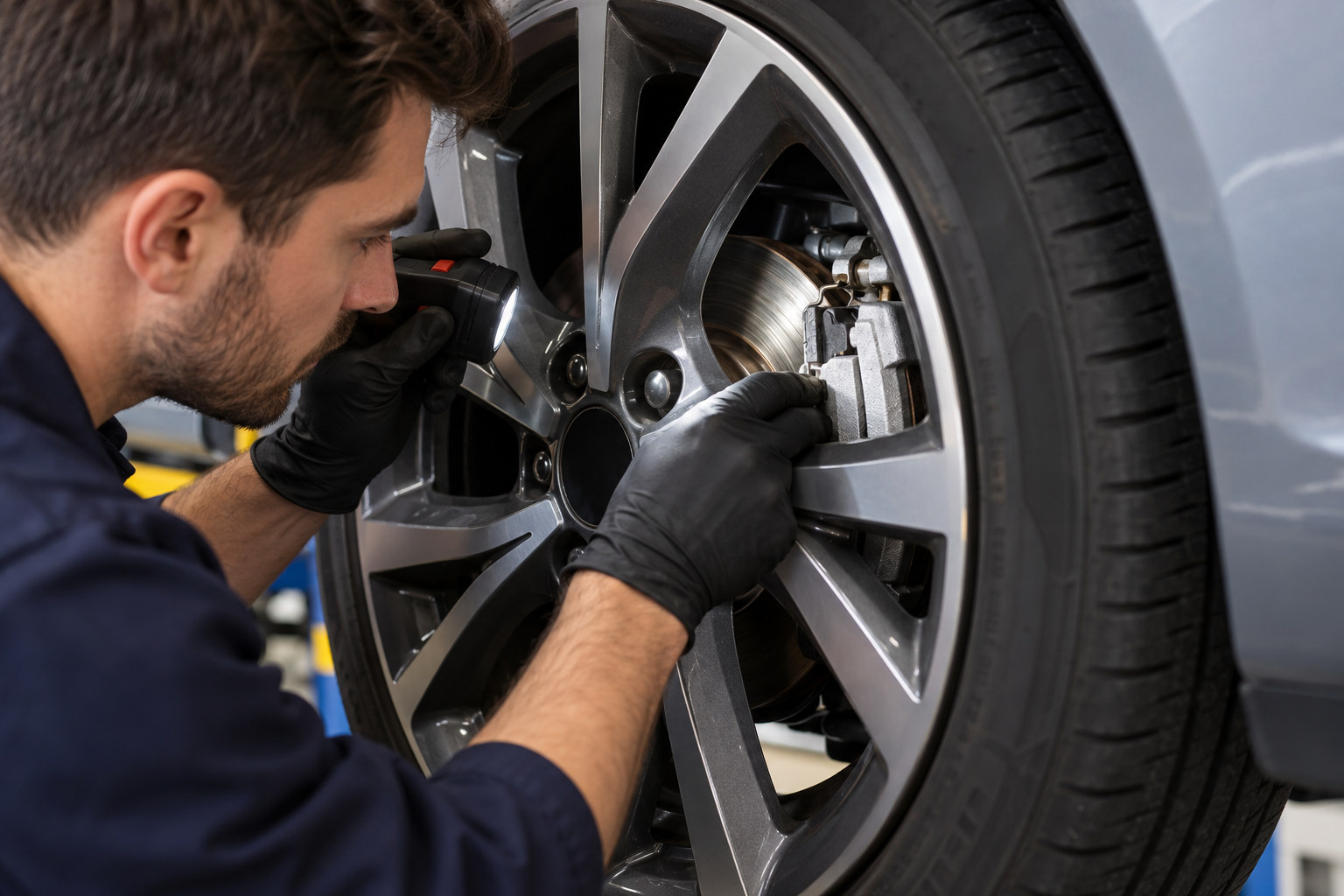
Look through the wheel spokes at the outer pad where it meets the rotor. You are judging how much friction material is left on the metal backing plate. A healthy pad shows a clear band. A worn one is down to a thin line. It is only a rough guide though, and the inner pad, which you cannot see from there, often wears faster.
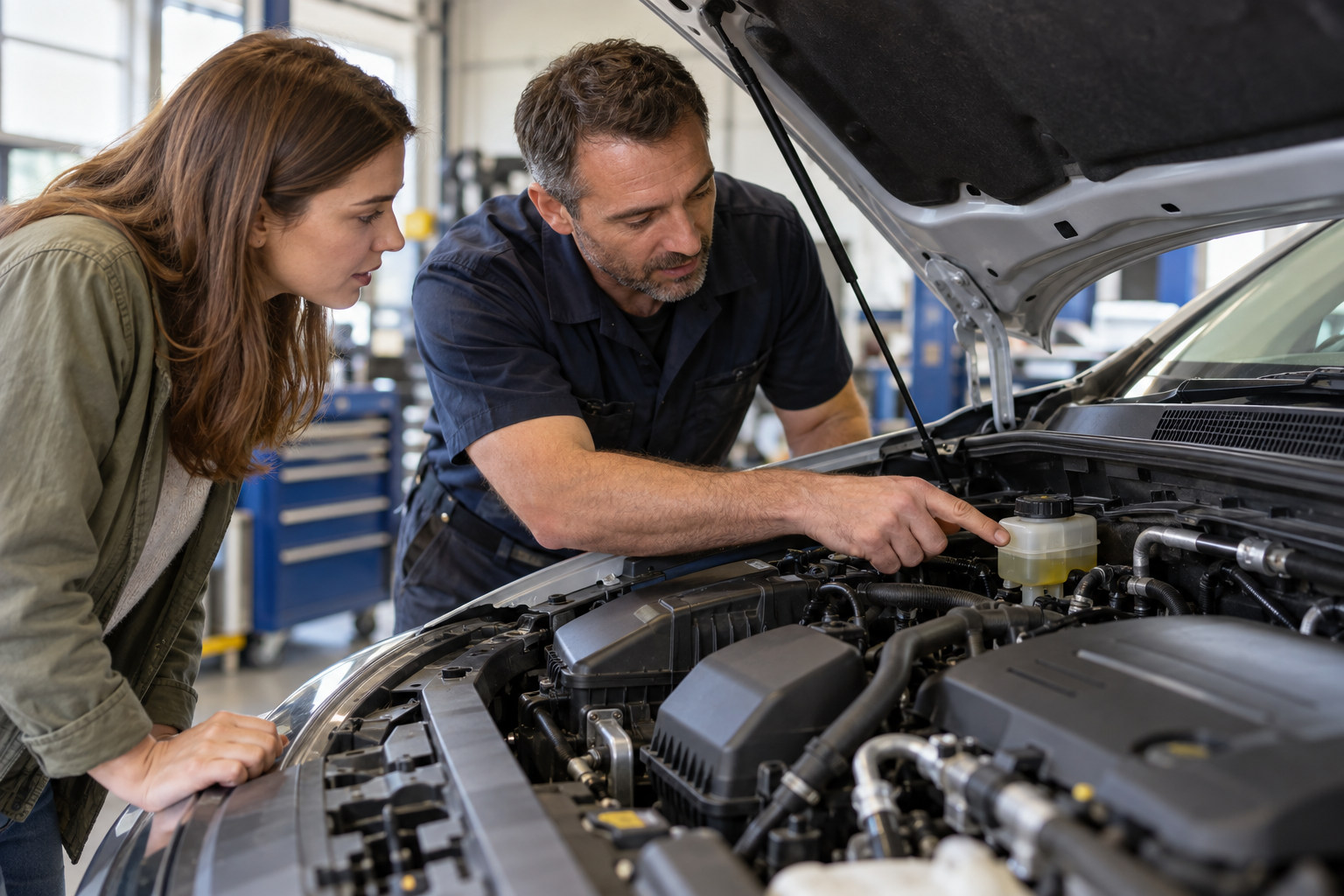
Open the bonnet and find the brake fluid reservoir, a small translucent tank with minimum and maximum marks. As the pads wear, the pistons in the calipers sit further out and fluid moves down to follow them. So a slow fall over months is usually wear rather than a leak. A level that was fine last month and is under the minimum today needs looking at straight away.
Then feel the pedal. There is no standard to compare it against, because it varies from car to car. What matters is the change over time, so take your reading now.
Last, listen on the first few stops of the morning. A squeal on a damp morning that clears after two or three stops is rust burning off the rotor face. A squeal on every stop that rises as you press harder is usually the wear indicator.
Worth knowing. Do not top up the brake fluid to hide a low level. That level is a wear gauge, and topping it up throws the reading away. It also makes a mess later: new pads mean the pistons get pushed back, and the fluid they were holding has to go somewhere. A low level is information, not a fault to correct.
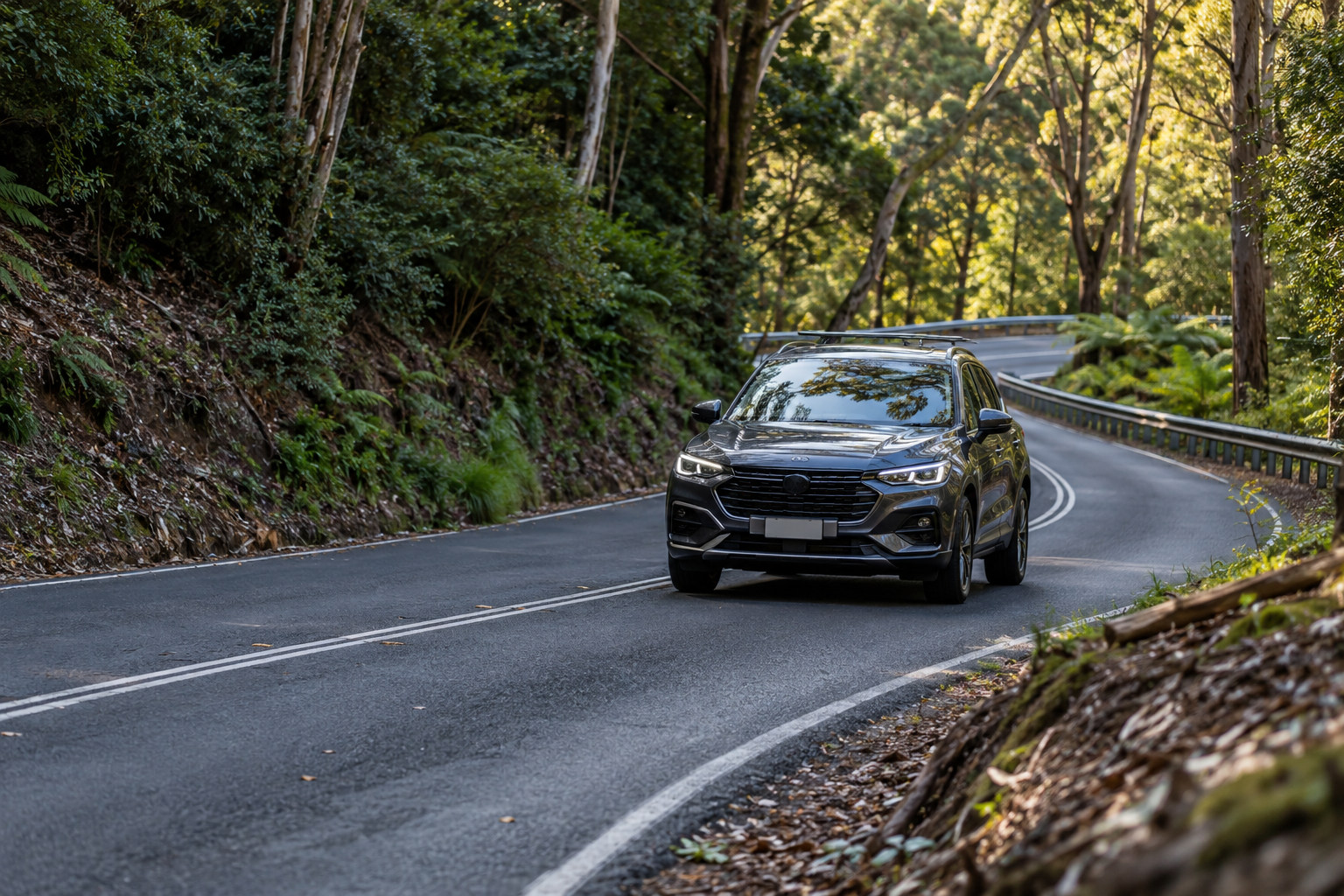
Where a car is driven changes brake wear more than what car it is.
Long descents off the Otway ranges are the hardest thing brakes do here. Riding them downhill holds the brakes on continuously instead of using them in bursts, and the heat has nowhere to go. Pads can glaze, which means the surface goes hard and shiny and stops gripping properly even with material left on it. Brakes can also fade, which is the pedal going long and soft near the bottom because heat has got into the fluid. The answer costs nothing. Change down a gear, let the engine hold the car back, and save the brakes for the corners.
Towing loads the tow car’s brakes on those same descents, and a caravan or a boat over the ranges in summer is the worst version of it.
Gravel roads wear pads and rotors together, because grit gets in between the two and works like sandpaper.
Salt air on the coast run through Lorne and Apollo Bay does something different. Rotors surface-rust while a car sits, and the first few stops scrape until it clears. That is normal, and it worries people who have not met it before.
Steady running on the Princes Highway is the gentlest use there is. Pads last well, and the part that ages first is the fluid. Low use does not mean nothing is wearing.
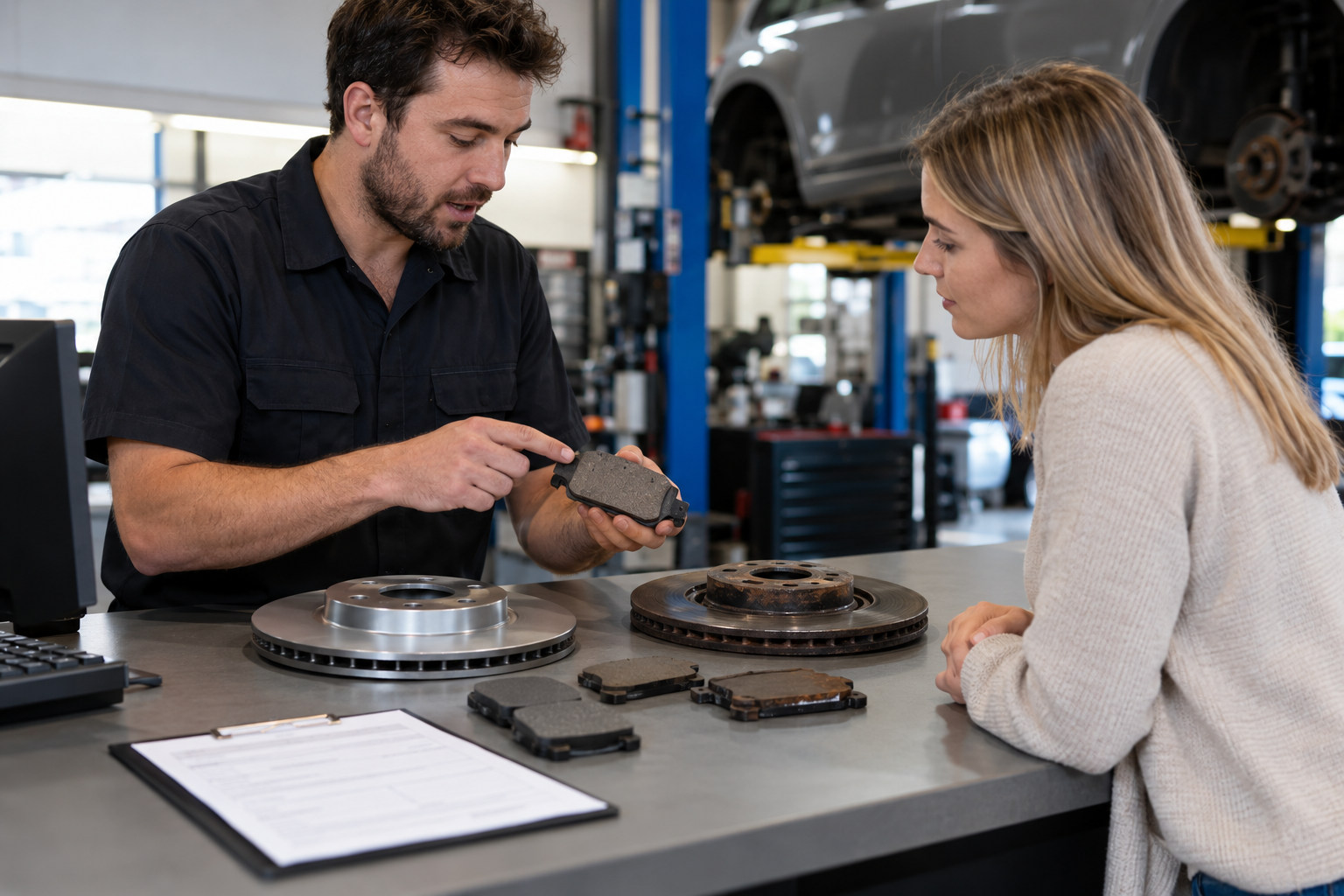
Brake quotes vary for real reasons, and knowing them makes the numbers easier to read.
Parts are the first reason, and there are three kinds. Genuine parts come from the vehicle manufacturer, in the manufacturer’s own box. OEM equivalent parts are made by the company that supplies the car maker, sold in that supplier’s own box instead. Aftermarket parts are made by a different company to fit your car, and they run from budget up to better than what came out. None of the three is automatically the right answer, so what you want is to know which one you are being quoted and compare like with like.
One thing applies to all three. No Australian rule makes a replacement brake pad carry an approval stamp. The Australian Design Rules are the national vehicle safety standards, and they apply to a car when it is first supplied here rather than to a part fitted years later. What the law asks instead is that the car keeps meeting the braking standard it was built to, and that anything sold to you is fit for the job. Some pads do carry a European approval mark, known as R90. Makers who sell here meet it by choice, not because the law says so. It is a fair thing to ask about, and no substitute for the workshop knowing the part.
Scope is the second reason. Brakes are usually priced by axle, because pads go on in pairs across an axle so both sides bite evenly.
Worth asking when the quote comes back:
That last one matters more out here than it does in the city. A part ordered in from Geelong, an hour and about 75 km away, is better known about at quote time. What a brake service covers is set out in full on the brakes page.
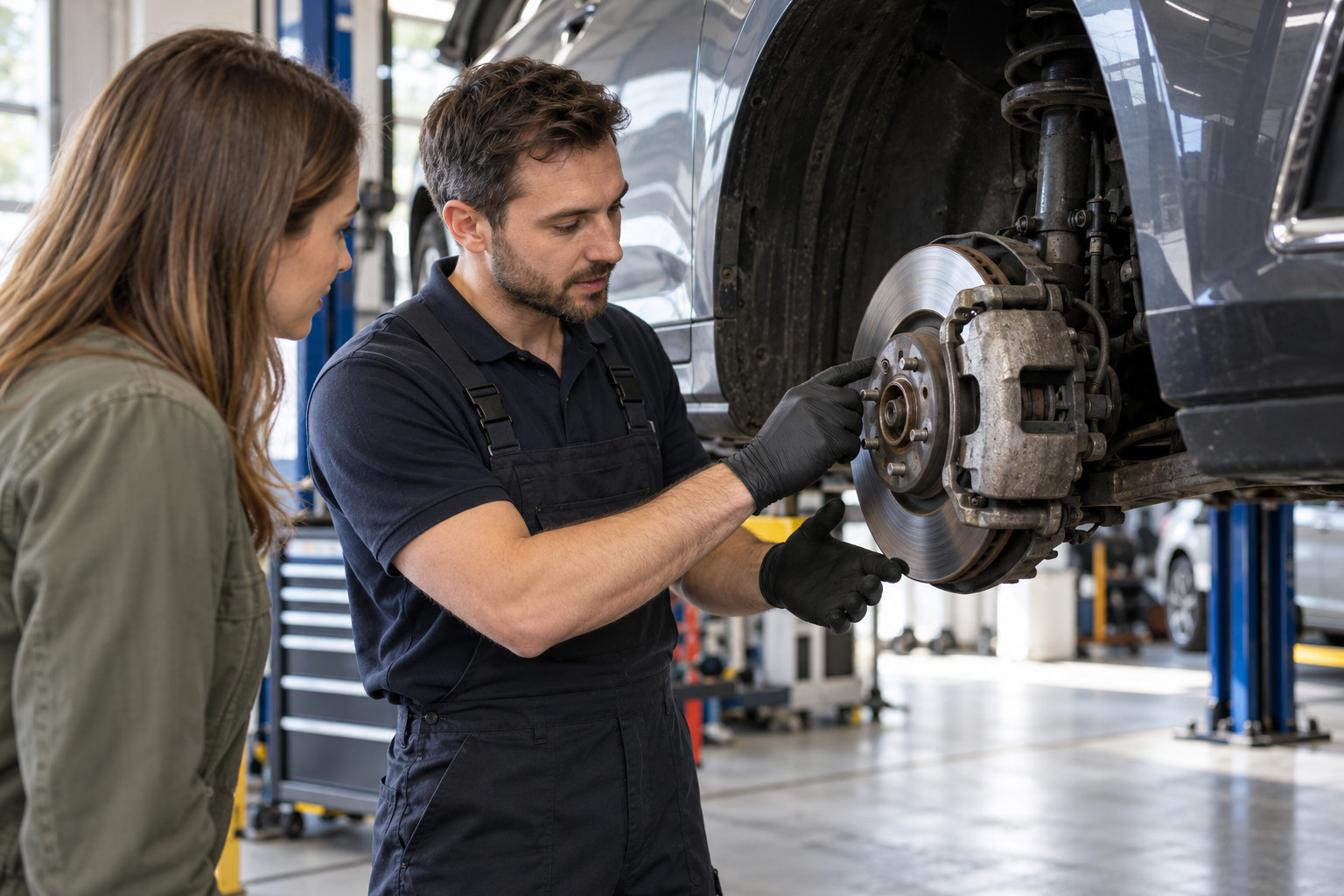
Usually yes, for a while. A squeal is a booking rather than an emergency, and brake work caught anywhere in the sequence above is planned work. That is worth saying plainly, because brakes are the system people are most easily frightened about.
Four situations are different.
Grinding means the friction material has gone and metal is running on metal. Stopping distances get longer, and the rotor is being cut every time you brake. Deal with it now rather than next month.
A pedal that goes soft or long suddenly is not wear, because wear is gradual. A sudden change points at the hydraulics, which means a leak or air in the system. That is a stop-driving situation, and so is a pedal that sinks slowly towards the floor while you hold steady pressure at the lights.
A car that pulls hard to one side under braking is a handling problem before it is a wear problem. Shudder through the pedal or the steering wheel is a near neighbour. It is often the rotors, but worn steering or suspension parts can do it too. Tyres and wheel alignment can make a car pull as well, and that part of it belongs at a tyre shop rather than a mechanical workshop.
When you are ready to book, the contact form is the quickest route, and Callahan Vehicle Maintenance is open 7:30am to 5:00pm on weekdays. Put a plain description of what the car is doing into it: what the noise sounds like, when it happens, whether it changes when you press harder, and whether the pedal feels different from six months ago. Almost nobody brings that last one, and it saves the most time. It is also the shortest route to a straight answer about brake repairs in Colac.
There is no single answer, because pads are worn out by how a car is driven rather than by how far it travels. Short trips and hills get through a set much faster than steady highway kilometres do. The way to know where yours are up to is to watch the pedal, the fluid and the pads themselves, not the odometer.
Usually because the pads are wearing, which is what the level is there to show you. As the friction material thins, the pistons sit further out and fluid moves down behind them, so the reservoir reads lower than it did. Judge it by speed. A gradual fall over months fits normal wear, and a sudden one does not.
Not necessarily. Pads are changed in pairs across an axle so the car brakes evenly, but the front and rear sets rarely reach their limit at the same time. Having one axle done and the other left for later is normal practice, not a corner being cut.
By time rather than by distance, because the fluid takes in moisture whether the car gets driven or not. Around two years is the interval many carmakers set, and the one that applies to your car is printed in its logbook. If you cannot find it there, ask at the next service.

















Website By CJ Digital


