
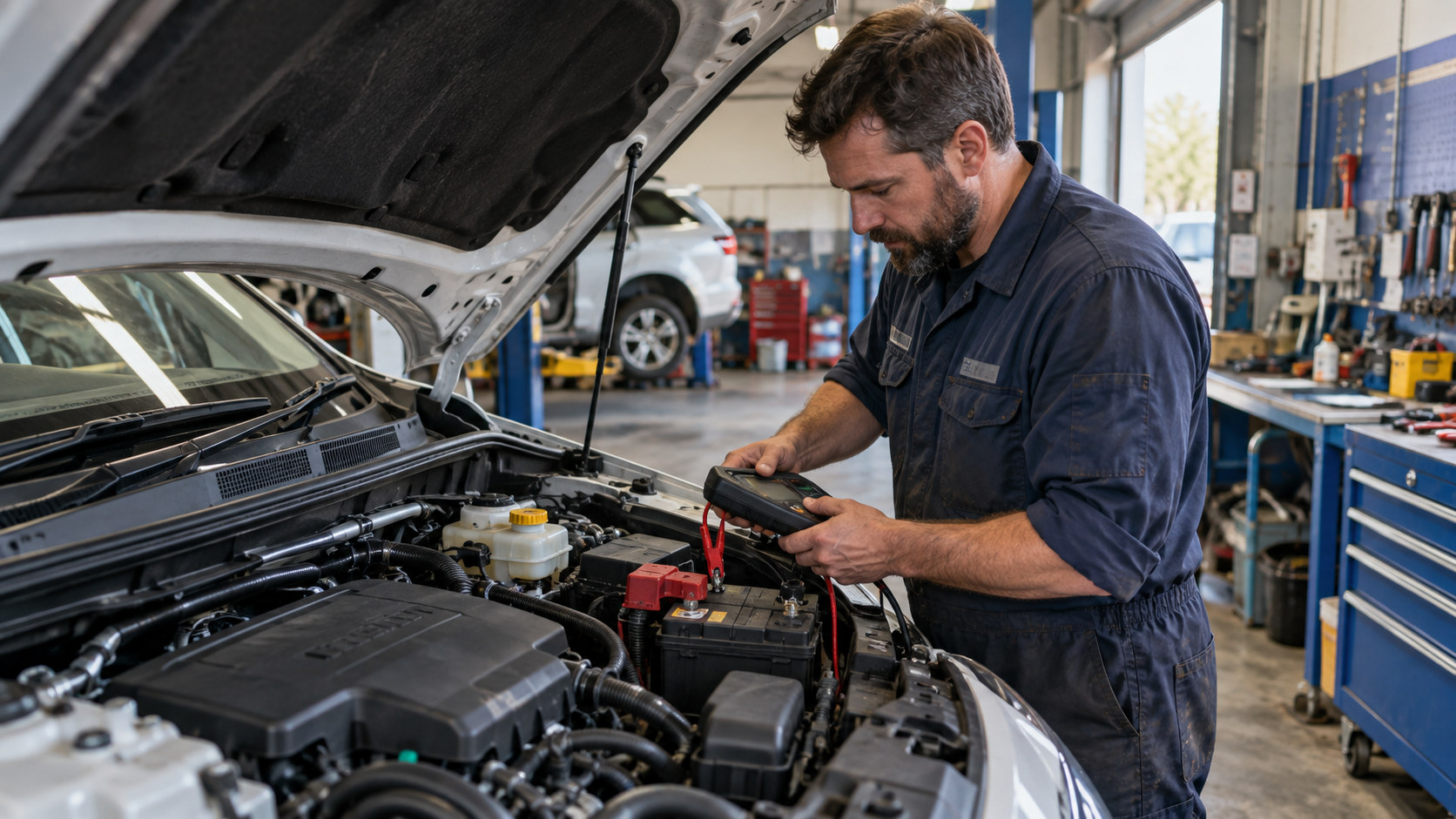
A car battery that keeps going flat is almost always one of four things. The battery has worn out. The trips are too short to put back what starting takes out. Something is drawing power while the car sits. Or the charging system is not keeping up. Which one it is decides whether a new battery fixes the problem or only delays it. A car battery in Colac gets a harder version of the second one than a city car does. Short town runs with days parked in between are the normal pattern here.

Start with age. RACV puts the working life of a standard lead-acid battery at three to five years, and an AGM battery at five to seven. A battery near the end of that still starts a warm engine on a mild day. Then it fails on the first cold morning, or after a week standing. That on-again, off-again stage is where a lot of repeat flat batteries sit.
The second cause is the driving itself. Starting an engine takes a large amount of charge out in a few seconds, and it is the drive afterwards that puts it back. A short drive never finishes the job.
The third is a parasitic drain, which means something keeps drawing power after you switch off and walk away. A light left on where you cannot see it, a module that never sleeps, wiring from an alarm or a dash camera. Every parked car draws a little. A drain is when it draws too much.
The fourth is a charging fault. The alternator is the belt-driven generator that charges the battery while the engine runs. If it is not putting out what it should, the battery leaves the driveway short and gets shorter every day. This is the one that goes flat while you drive rather than while the car sits.
| What it is | From the driver’s seat | What confirms it |
|---|---|---|
| The battery has worn out | Fine when warm, slow or dead on a cold morning or after days parked | A battery test under load |
| Short trips and standing time | Fine after a long run, flat again a week or two later | The pattern, plus a test showing a healthy battery sitting part charged |
| A parasitic drain | Fine when parked, dead the next morning, over and over, on a battery that tests healthy | Measuring what the car draws with everything switched off |
| A charging fault | Warning light, lights dimming at idle, going flat while you drive | A check of what the alternator is putting out |

Charging is not instant. The alternator replaces what starting took, then keeps going, and that takes time at a steady engine speed. RACV puts it plainly: a drive under twenty minutes does not allow much recharging time.
Do that often enough and the battery never gets back to full. A lead-acid battery that lives part charged wears out faster than one that lives full. The driving that ages it early is also the driving that will not start it.
These are the patterns that leave a battery short:
That last one is why the fault is so hard to pin down. A run up to Geelong is about 75 km and about an hour, easily enough to put a proper charge back in. Everyone decides it was a one-off, and then it is flat again.
The battery is the part that shows the symptom. It is not always the part with the fault.

Heat and cold both hurt a battery, but they do different jobs. Summer heat does the damage, speeding up the chemical wear inside the case and the water loss with it. None of it shows while the weather stays warm, because a warm engine is easy to start.
Cold exposes what summer did. A cold engine has thicker oil and turns over harder, so it asks for more current than a warm one. The cold also slows the battery’s own chemistry down, so it has less to give. A battery that has been weakening all summer meets both on the same morning.
That is why batteries fail on the first properly cold day rather than on the hottest one. The cold did not break it. It asked the question.
Worth knowing. Three things are safe to notice without touching anything. Headlights that dim at idle and brighten when you rev. An engine that turns over slowly on the first start of the day. A white or green crust around the battery terminals. Any of them is worth mentioning when you book the car in. Changing a battery yourself is a bigger job than it used to be, though: on many newer cars the replacement has to be registered to the car’s electronics before the charging system treats it as new.
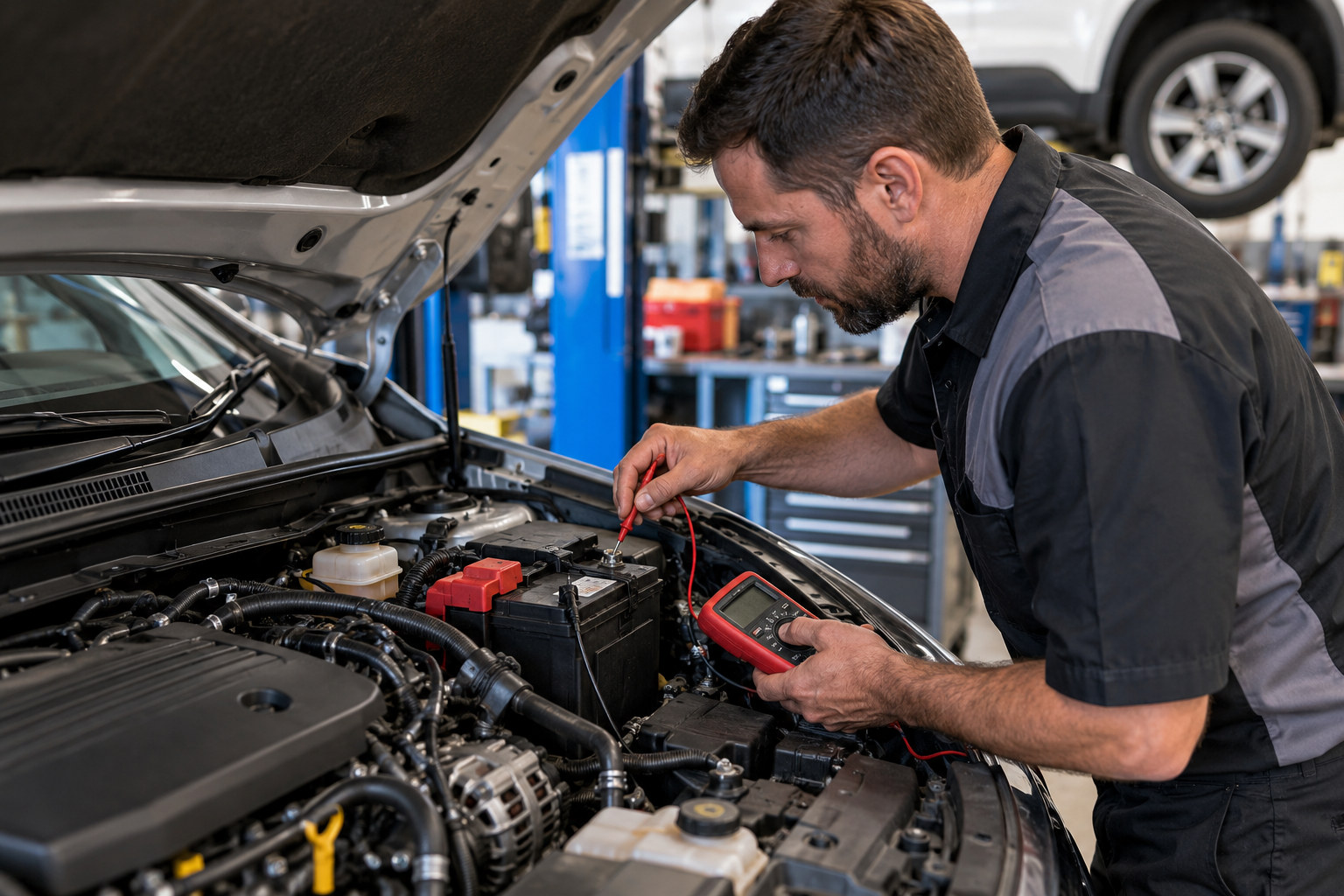
These are the two causes that make a healthy battery behave like a dead one.
A charging fault usually announces itself. A battery or charging warning light comes on. The headlights and dash lights dim at idle and brighten when you rev. The car can die while you are driving rather than after it has been parked.
A drain is the quiet one. The car was fine when you parked it and it is dead in the morning, again and again, on a battery that keeps testing healthy. Nothing looks wrong while you drive, because the alternator is covering the drain the whole time.
Telling the two apart is a workshop job, not a driveway one. The car’s draw has to be measured with everything shut down, and the charging output checked under load. If the pattern matches either description, that is auto electrical and diagnostics work.
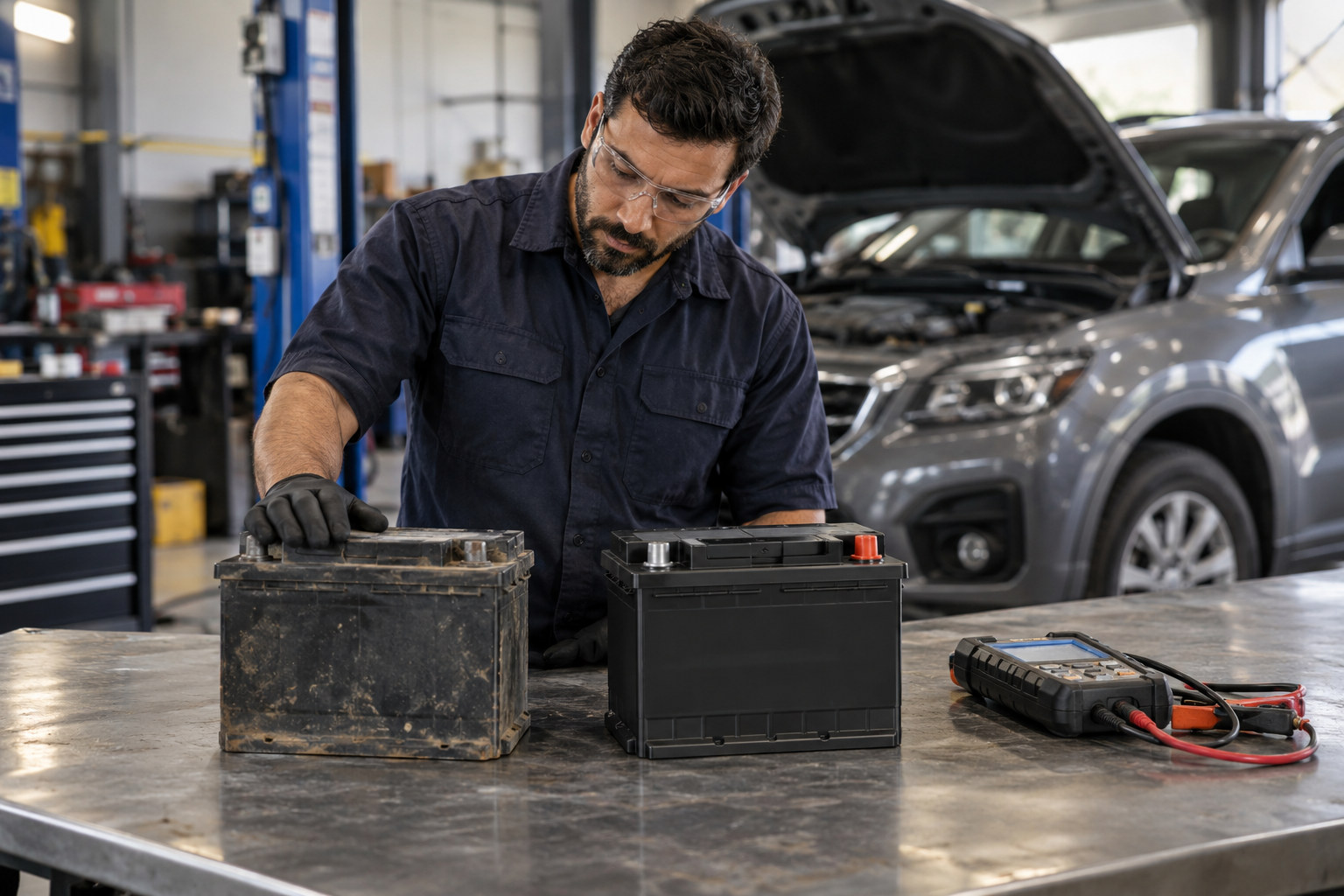
A battery at the end of its life is a replacement, and there is nothing else to decide. A healthy battery that keeps going flat is a symptom. Fitting a new one to an undiagnosed drain buys a few weeks and the same problem back.
A jump start tells you the car will run. It does not tell you why it stopped, and it puts very little charge back. A car that needs jump starting over and over is telling you something.
What makes one job dearer is not the battery. It is how long the cause takes to find. A worn battery is quick, and so is a charging fault, because there is an obvious thing to measure. A drain takes longer, because circuits have to be isolated one at a time. A test still costs less than a wrong guess.
None of this is an emergency. But a battery that has stranded somebody once will do it again, and it picks its moment. The person it strands is the one who drove down to Apollo Bay on a Sunday. If the car is going flat repeatedly, book it in for battery testing and replacement in Colac rather than guessing at the cause.
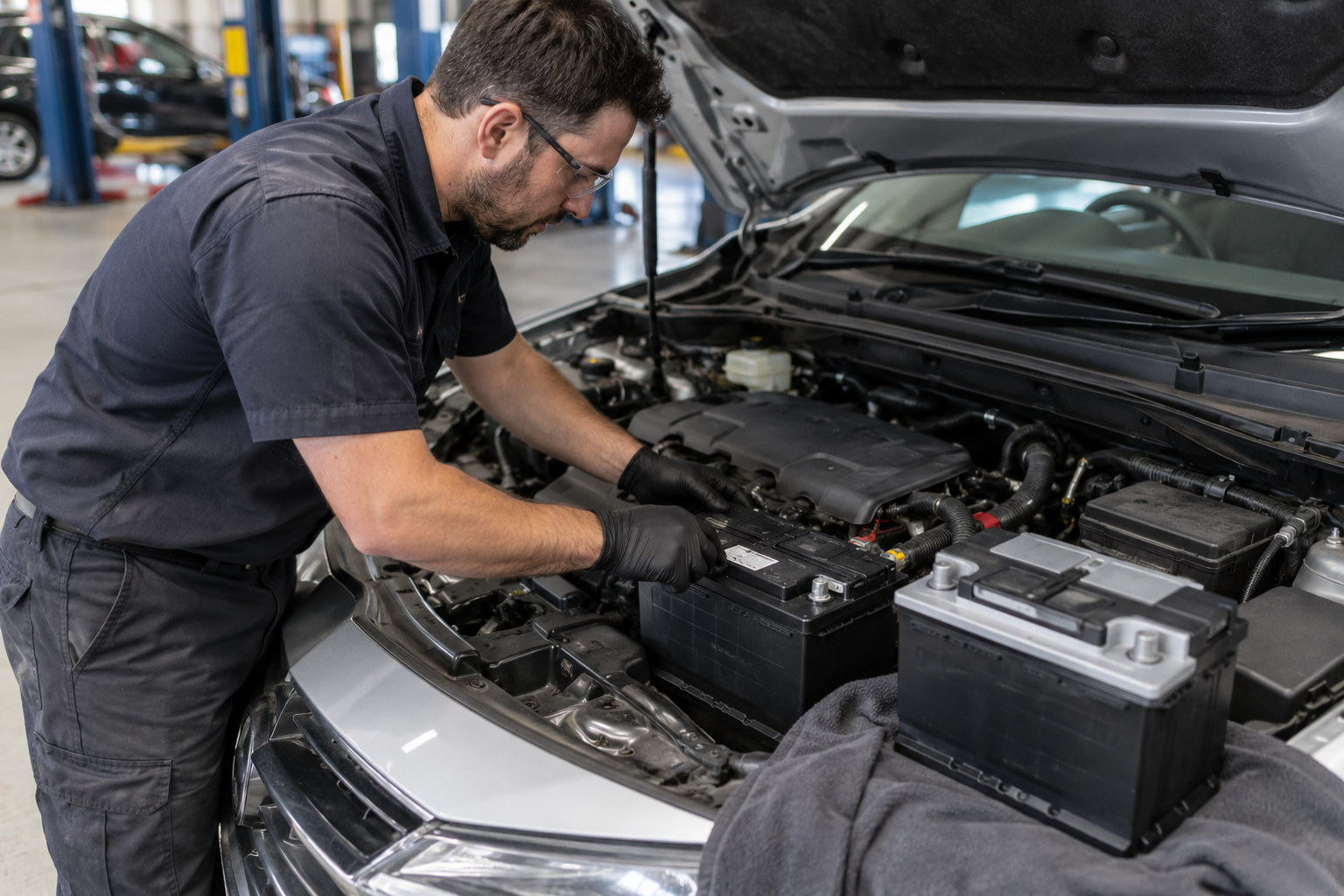
Only if the car was built for one. Not all car batteries are interchangeable.
The question comes up because of stop-start systems, which switch the engine off at the lights and restart it when you pull away. That car restarts far more often than an ordinary one, and runs its lights and fans off the battery in between. The workload needs a battery built for it: an AGM battery, or an enhanced flooded one. AGM stands for absorbent glass mat, and describes how the acid is held inside the case.
Fit an ordinary battery to a stop-start car and it fails early. Battery suppliers are blunt about it, and it is not a saving. Going the other way is no better, because an AGM battery in a car never built for one is money spent on nothing. The right answer is whatever the vehicle was designed to take.
Book online through the contact form and say what the car has been doing. How many times it has gone flat. Whether it starts well after a long run and struggles after a few days parked. Whether the lights dim at idle. Those answers will get a car battery in Colac to the right test faster than anything else. Bond is the brand fitted if it does need replacing.
Age is only one of four causes, so a new battery fixes only one of them. If the real problem is a drain, a charging fault or the driving pattern, the new battery meets the same conditions the old one did. It simply takes a little longer to give up, because it started out healthy.
It puts a little back, but often not as much as starting the car took out. Charging needs the engine running for a while at a steady speed. A quick trip ends before much has gone in. Several short trips in a row leave the battery further behind each time rather than catching it up.
The timing is the clue. Charging problems tend to show themselves while you are driving, with a warning light or dimming lights. A battery or drain problem shows up after the car has been sitting. That points you in the right direction, but it does not settle it. The only thing that does is having both the battery and the charging output measured.
It can. A parked car is still drawing a small amount of power, and the battery is slowly losing charge on its own as well. A battery left sitting at a low state of charge deteriorates faster than one kept topped up. A car used regularly for reasonable distances is easier on its battery than one that stands for long stretches.



















Website By CJ Digital


